The Myth of the Trickster Raccoon

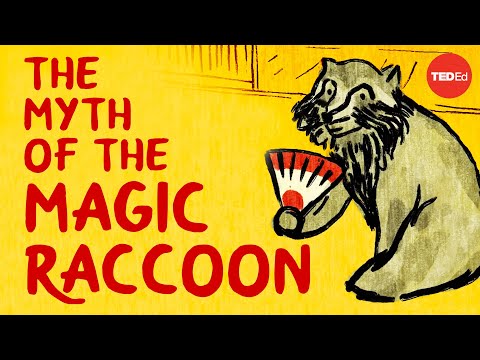
Here is a story on The Myth Of The Magic Racoon. 

On the dusty roads of a small village, a travelling salesman was having difficulty selling his wares. He had recently traversed the region just a few weeks ago, and most of the villagers had already seen his supply. So he wandered the outskirts of the town in the hopes of finding some new customers. Unfortunately, the road was largely deserted, and the salesman was about to turn back, when he heard a high pitched yelp coming from the edge of the forest. Following the screams to their source, he discovered a trapped tanuki. While these racoon like creatures were known for their wily ways, this one appeared terrified and powerless.

 The salesman freed the struggling creature, but before he could tend to its wounds, it bolted into the undergrowth. The next day he set off on his usual route. As he trudged along, he spotted a discarded tea kettle. It was rusty and old but perhaps he could sell it the local monks. The salesman polished it until it sparkled and shone. He carried the kettle to Morn-Ji Temple and presented it to the solemn monks. His timing was perfect they were in need of a large kettle for an important service, and purchased his pot for a handsome price. To open the ceremony, they began to pour cups of tea for each monk but the kettle cooled too quickly. It had to be reheated often throughout the long service, and when it was hot it seemed to squirm in the pourer’s hand. By the end of the ceremony, the monks felt cheated by their purchase, and called for the salesman to return and explain himself.

 The following morning, the salesman examined the pot, but he couldn’t find anything unusual about it. Hoping a cup of tea would help them think, they set the kettle on the fire. Within moments, the metal began to sweat. Suddenly, it sprouted a scrubby tail, furry paws and a pointed nose. With a yelp, the salesman recognized the tanuki he’d freed. The salesman was shocked. He’d heard tales of shape shifting tanuki who transformed by pulling on their tails. But they were usually troublesome tricksters, who played embarrassing pranks on travellers, or made it rain money that later dissolved into leaves. Some people even place tanuki statues outside their home and businesses to trick potential pranksters into taking their antics elsewhere. However, this tanuki only smiled sweetly. Why had he chosen this unsuspecting form? The tanuki explained that he wanted to repay the salesman’s kindness. However he had grown too hot as a tea kettle, and didn’t like being burned, scrubbed, or polished. The monk and the salesman laughed, both impressed by this honourable trickster. From that day on, the tanuki became an esteemed guest of the temple. He could frequently be found telling tales or performing tricks that amused even the most serious monks. Villagers came from far away to see the temple tanuki, and the salesman visited often to share tea made from an entirely normal kettle.

Thank You

The role of a Therapist

The role of a therapist in life is very important. They help with body and mind problems. They help patients dealing with different issues, such as mental issues, physical issues, and body issues. Therapists meet with patients regularly to help them cope with different issues they are struggling with. They advise the patient’s family members, relatives, and friends on what they can do to help the patients cope with their problems. For example, a patient might be struggling with a particular phobia or habit they need to get rid of as quickly as possible. Therapists can help with that. But how do they do it? Well, there many different strategies therapists can do to fix a patient’s problem. Assessments are one of them. Now, by an assessment, I don’t mean a math assessment or something like that, by assessment I mean a protocol assessment. These types of assessments are way different than school-based assessments. These assessments are used to see what level the patients are at right now. A therapist might show pictures and ask the patients to tell them what they see. This can also help the therapists understand what the patients are coping with and how they can help them. Although a therapist’s job seems pretty simple there are some required skills therapists must-have. Having the skill of communicating well is a mandatory skill. Talking to patients in a way they can understand you is very important.

Being a communicative person can help patients with what they are coping with. Another skill that is extremely important is time-management. You and your patient have to agree on which day and time will work for you and them. So prioritizing tasks and managing time plays a strong role in therapy. Listening and connecting with patients is another important skill to have. Patients need to vent out and they need a person they can trust to tell them how they are feeling and what they want to do so their problem can be fixed. And although it might seem pretty simple, it’s not. A patient needs to get someone’s trust so they can feel healthy and happy instead of troubled and miserable. A therapist needs to be positive and optimistic so their patients can feel the same way and maybe even better. And although a therapist might go through some obstacles they know their changing lives. 

by Megha Krishnan

Color Blindness

Imagine yourself on a rainy day. How boring. The grey and dull colors makes us sigh. Suddenly, the rain stops. “Finally!”, may be your reaction. Just then, the sun shines yet again to form a beautiful rainbow. The colors are back in the sky and you break into a wide grin.


Color is a very important prospect in our lives. The world is filled with wonderful shades of green, blue, red, yellow, and many more. Unfortunately, while many of us enjoy the colors, some of us don’t. 


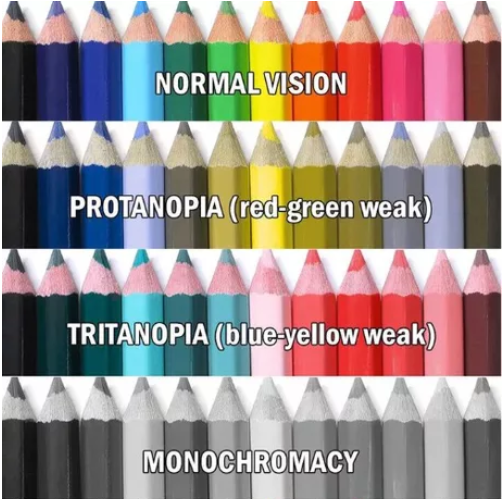
When is comes to color blindness, it is a inability of seeing some colors than the other. For example, people with Protanopia (red-green color blindness) tend to have an issue with seeing red and green shades of colors.


There are mainly 3 types of color blindness -:


1. Red-green color blindness/Protanopia (Most common)

2. Blue-yellow color blindness/Tritanopia (Less common)

3. Complete color blindness/Monochromacy (Uncommon)


By reading all of this, if you have some difficulty identifying some colors, just test yourself first, then if you are about 75% sure, go to a doctor for genuine tests. If you are 100% sure, (thanks to the doctor), just brush it off.


This may sound as the worst advice you have heard, but you can’t sulk about it. When life turns it’s back on you, you turn your back on it. There is no known cure for color blindness, but there are contact lenses and glasses that help you in your daily life. Moreover, think yourself as a unique guy/girl, having superpowers.


It might be a little hard to identify colors and to enjoy it like the others, but this is your life and your sight. Whatever you see is what others see too, because,

We Are One!!

INDIA

India

Where is India? Does it have history,
are there important places to visit? Do People live in India, if so, is there
an environment? You will get the answers to all the questions in this speech?

Where is it?

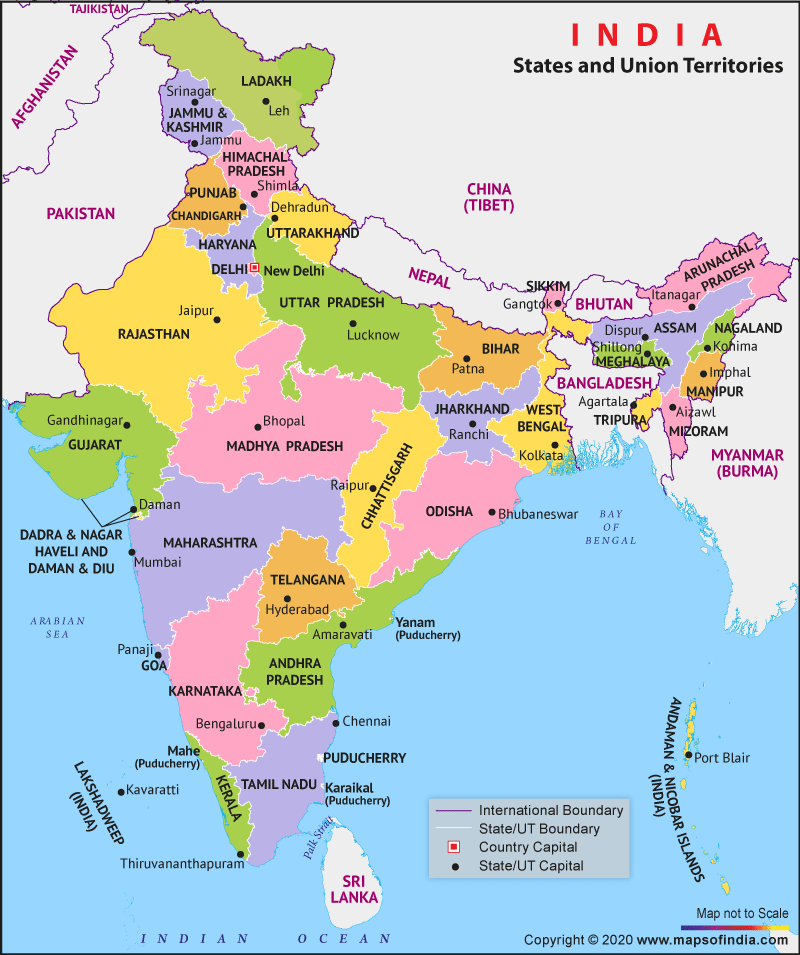
India is a country in Asia that is a peninsula.
The Himalayas form India’s north border, they cut India from rest of Asia. Thar
Desert is in West & Indus and Ganges are in the north. On the northern side
of India is Pakistan, China, Nepal & Bhutan, to the east is Bangladesh and
Myanmar. South of India is the island of Sri Lanka, to the southwest is the
Arabian Sea and to the southeast is the Bay of Bengal. New Delhi is the capital
of India.

India

History & Heritage

India’s civilization is very old.
About 1300 years ago Muslims invaded India. Muslim rule lasted until the
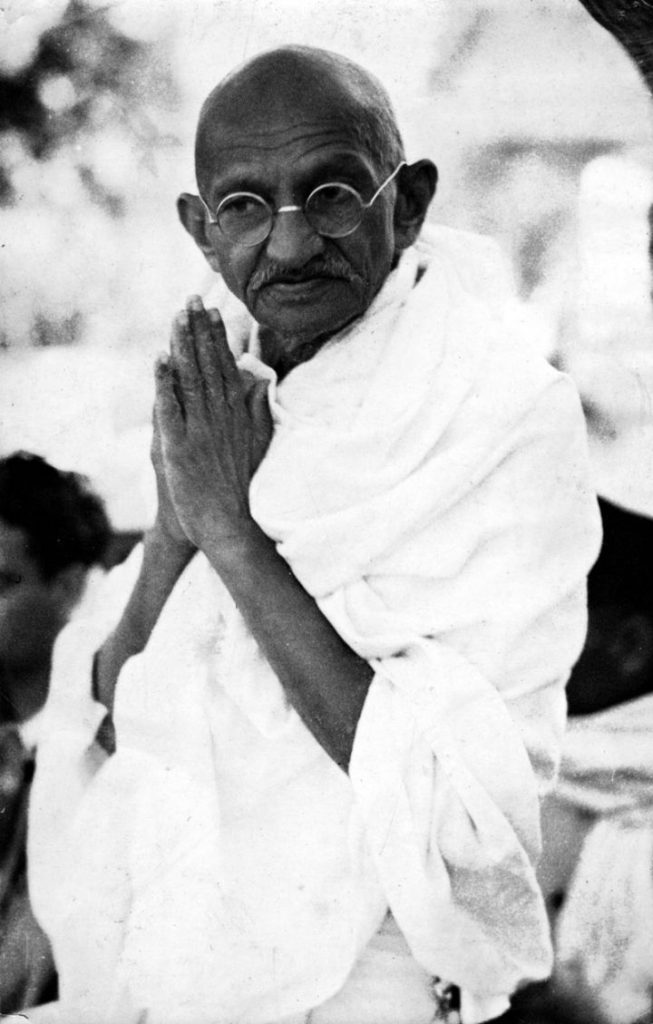
1600’s. In 1858, Britain rule started. In 1920, a lawyer named Mahatma Gandhi began
asking his fellow Indians to resist the British rule – but not with weapons,
but in a peaceful way. Before 1947, India was free. Gandhi was a father of the
nation.

Mahatma Gandhi

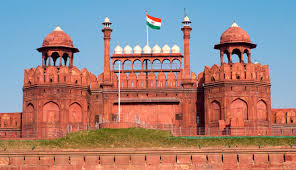
Delhi:

Red Fort is in Delhi. It was built by
Shah Jahan. Qutab Minar is a tallest tower in world. Delhi, also has ancient
gates and walls.

Red fort

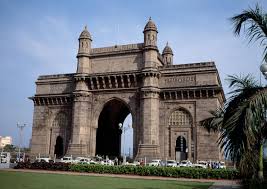
Mumbai:

Gateway of India is in Front of Taj Mahal
palace. British King George V & Queen Mary came to India through this gate.
Taj Mahal Palace is a luxury hotel & has a view of the Ocean and the
Gateway of India. Victoria Terminus is named after Queen Victoria and is a
central train station.

Gateway of India

Environment

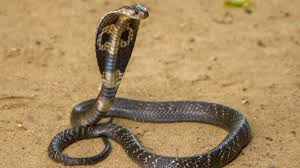
Animals:

One of the famous reptiles is the Cobra. It
hunts small animals like rats. It is also known to bit humans. It lives in
villages. The Indian elephant is very strong. The Indian elephant is very
strong. People once used it to lift logs & carry crops.

Plants:


The flora of India is one of the richest in
the world due to the wide range of climate, topology and habitat in the
country. Forests cover 20% of the country. There are estimated to be over 3000
Indian plat species and 18,000 species of flowering plants. Some examples of
the flowers are Lotuses, Orchids & Marigolds. And some of the plant
examples are Sandalwood, Teakwood and more. India is also known for growing tea
and spices such as basil, rosemary and ginger. They also grow lentils and
grains like wheat and dal.

Food

India is known for its spices. In India, a mix of spices is called masala. People of India also make dals from lentils. They make rice as a side dish. They also cook vegetables in spices. They make bread from bajra and wheat. Chai and Coffee is are main drinks in India. Lassi, is a sugary, yogurt drink. Also, in India soda is a fizzy drink for example Masala Soda.

Fencing

I will be telling you about fencing. Now you may be thinking what is fencing? Fencing is a sport it is essentially sword fighting. There are 3 disciplines foil, epee, and saber. They all have different blades and rules. Hopefully, by the end of this, you will understand the basics of fencing. The goal of fencing is to hit your opponent in the target area while trying to block your opponent’s attack. If you hit the target area then you get a point. The highest score at the end of time wins. Another thing that you should know is the right of way. If both fencers hit each other at the same time then whoever is in an attacking position first or fights more aggressively gets the point. Now I will talk about the three disciplines in fencing.

Foil is the most common and technical discipline in fencing. The foil sword is the lightest and smallest. For foil, the target area is the chest and back. You have to attack your opponent with the point of your blade when you hit with the side of the blade it does not count. In this right of way counts.

The saber is the fastest of the disciplines. The blade for this is slightly smaller than the foil and the handle is different. The right of way goes in this. For this, the target area is anywhere above the waist. It is the only discipline in which you can cut or slash with the side of your blade.

Next is the epee. In comparison to saber, the epee is slow it is the slowest of the disciplines. The epee blade is the biggest and heaviest blade. The target area is the entire body. Like foil, you must use the tip of your tip to attack. But unlike foil and saber epee does not have right of way. So, if the fencers touch each other at the same time they would both get the point.

In fencing, there are a couple of rules. You can not step off the piste which is the rectangle-shaped platform fencing is played on. You can also not turn your back on the opponent. This is because the back of the head is not covered and if a sword hits that area it would hurt. Next, you can not use your nonplaying hand because it would hurt if the blade hit your hand. A yellow card is a warning a red card means that the opponent is awarded a point a black card means you have been disqualified. On rare occasions, neither fencer attacks the referee will stop the game.

All in all, fencing is an amazing sport

Covid-19 Vaccine

As all of us are fighting the coronavirus pandemic hope is coming. A vaccine has been developed for this sickness but many questions remain about this vaccine. “Will it work?”Should we take” “Are other people going to take it?”. I will try to answer these questions but before I answer let me tell you what the coronavirus is.

First of all the coronavirus is an infectious disease.  COVID-19, ‘CO’ stands for ‘corona,’ ‘VI’ for ‘virus,’ and ‘D’ for disease. Most people infected with the COVID-19 virus will experience mild to moderate respiratory illness and recover without requiring special treatment. Older people and those with underlying medical problems like cardiovascular disease, diabetes, chronic respiratory disease, and cancer are more likely to develop serious illnesses.

 Protect yourself and others from infection by washing your hands or using an alcohol-based rub frequently and not touching your face. The COVID-19 virus spreads primarily through droplets of saliva or discharge from the nose when an infected person coughs or sneezes, so it’s important that you also practice respiratory etiquette (for example, by coughing into your elbow). 

Now let us go back to the topic of the coronavirus vaccine. Everyone is hoping this vaccine will save thousands of lives. Ever since the pandemic started people have been urging for a vaccine. Now many companies have delivered this. Some companies are AstraZeneca, Fizer, Moderna, Bion tech. Their success is a scientific feat with few parallels. No vaccine has ever been developed so quickly, never mind manufactured for the world.  

There a few types of vaccines but I wil only talk about two of the vaccines types. The are two types of vaccine traditional and mrna. The main goal of a vaccine for a particular infectious agent, such as the virus that causes COVID-19, is to teach the immune system what that virus looks like. Once educated, the immune system will vigorously attack the actual virus, if it ever enters the body. 

.The traditional method that delivers viral fragments — either the dead husk of a virus or its disembodied proteins. These viral fragments can’t replicate and cause infection, but they do trigger an immune response.

Messenger RNA, or mRNA, is at the heart of both leading vaccine candidates, one from Moderna and the other from Pfizer and partner BioNTech. The companies’ clinical trial data suggest these vaccines are about 95% effective. mRNA vaccines are a new type of vaccine to protect against infectious diseases. 

To trigger an immune response, many vaccines put a weakened or inactivated germ into our bodies. Not mRNA vaccines. Instead, they teach our cells how to make a protein—or even just a piece of a protein—that triggers an immune response inside our bodies. That immune response, which produces antibodies, is what protects us from getting infected if the real virus enters our bodies. 

Both types of vaccines are okay to take. The traditional type of vaccine is slightly slower to produce and may require booster shots. But it’s a tried-and-tested approach. Although the mRNA vaccines can be designed quickly, people might develop immunity to the viral vector itself, limiting the ability to give multiple booster shots.  First, Frontline essential workers such as fire fighters, police officers will get the vaccine,then People aged 75 years and older, then, People aged 75 years and older, People aged 16—64 years with underlying medical conditions, finally Other essential workers, such as people who work in transportation and logistics, food service, housing construction and finance, information technology, communications, energy, law, media, public safety, and public health.

All COVID-19 vaccines currently available in the United States have been shown to be highly effective at preventing COVID-19 But ultimately all these decisions are up to you. Whether you want the vaccine or Which vaccine to take. This vaccine is a dose of hope that can light the way through these dark times.

The World of Fun

What is fun in your life? I am talking about a place that has food areas. It has rides like roller coasters and others. If you guessed amusement parks you were correct. Have you ever been to an amusement park? In my opinion amusement parks are probably the most fun way to have fun. Now I will tell you all about amusement parks.

First, let’s talk about amusement parks themselves. Amusement parks have been there for many many years. In fact, the oldest amusement park was made in 1583 which is 500 years ago! Sadly that amusement park is not there anymore. The oldest amusement park that is still running is Lake Coumounce which was made in 1846. The biggest amusement park of all is Walt Disney World. It is located in Florida, US. About 50 million people visit it every year! It contains 24 hotels, 4 golf courses, and 6 theme/water parks!

Now let’s talk about roller coasters. Roller coasters have also been there for a long time. The first roller coaster was built in 1884. It was very slow as it only goes 6 miles per hour. It was in Brooklyn, New York and it costed a nickel to ride it.

Now I will tell about the fastest roller coaster, slowest roller coaster, steepest rollercoaster, and many more. First lets start with the fastest. The fastest roller coaster is a ride called the formula rossa in Ferarri World in Abu Dhabi. It is so fast that it goes 150 mils per hour. That is double than the speed that a car goes on a freeway! It is so fast that to protect your eyes, you need to wear goggles! The smallest roller coaster is a roller coaster near Oslo Norway with the name of Dvergbanen. It just 26 meters in length and height of 2.5 meters. The longest roller coaster is in Kuwana, Japan and is 1.54 miles (2.48 km). The name is Steel Dragon 2000 and it takes 4 whole minutes to ride it once! I hope you have your lungs ready to scream for that long! The roller coaster with the steepest drop is in Yamananashi in Japan. It goes by the name Takabisha and it goes to 121 degrees!

You have got to give credit to Kingda Ka as it is the tallest roller coaster. It goes up to 456 feet and is also the second fastest roller coaster in the world. This ride is in New Jersey, USA. That is all the different records of roller coasters

Did u learn anything about roller coasters and amusment parks? I sure did. There is so many things about roller coasters and amusment parks I want to know. This helped me learn a few of my questions. I hope u learned alot about roller coasters and Amusement parks.

Steepest drop

Fastest Roller Coaster

Longest Roller Coaster

Biggest Amusement Park

Tallest Roller Coaster

Smallest Roller Coaster

First Roller Coaster

Should Truman Have drop an atomic bomb on Japan

Was Truman right to do what he did? Did he make the right choice? I think Truman made the right choice of dropping the atomic bomb on Japan.

In my opinion Truman made the right choice because it saved a lot of American lives. According to the text “ In his 1955 memoirs, Truman strongly believes dropping the bomb saved half a million American lives.  ”. Dropping the atomic bomb was the best thing to do instead of risking a lot of American lives.

Another reason is that Japan attacked the Pearl Harbor an American Naval Base on the island of Oahu, Hawaii, west of Honolulu. The text says, “ In the surprise attack, Japan sunk several ships, destroyed hundreds of planes and ended thousands of lives. The Japanese goal was to cripple the U.S. Pacific fleet, and they nearly succeeded. ”.  Think if they attacked are naval base, then we need to attack theirs in Hiroshima to take revenge.

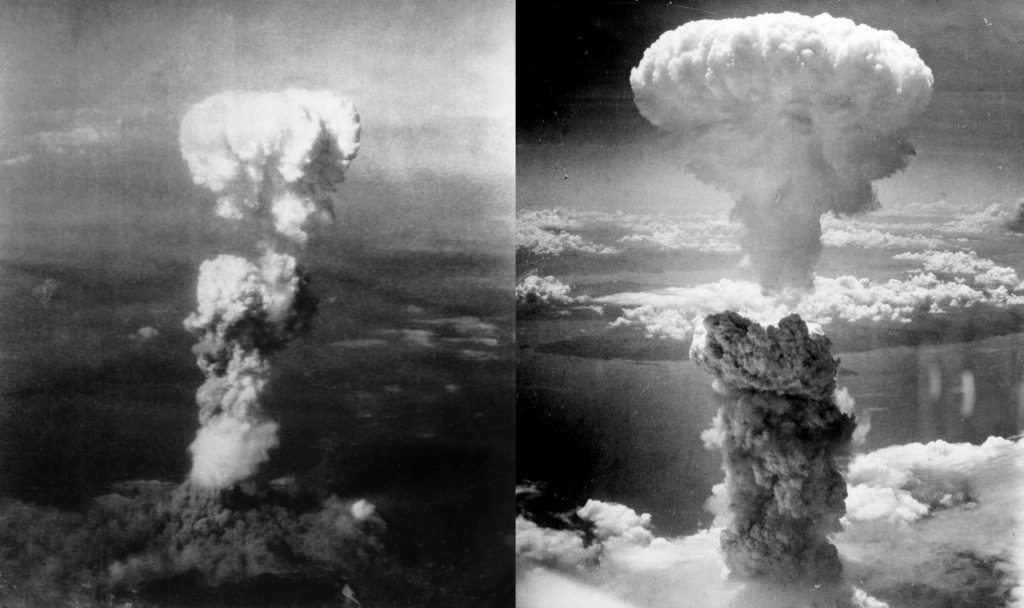
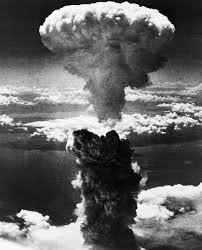
Finally, Germany surrendered on May 7 and in the east on May 9, 1945 to America and its Allies France, Great Britain, the Soviet Union or now called Russia. But Germany’s Allie Japan did not wan to surrender. So, Truman thought of something really destructive to destroy everything & end World War 2. According to the texts “  At 8:15 am Hiroshima time, “Little Boy” was dropped. The result was approximately 80,000 deaths in just the first few minutes. Thousands died later from radiation sickness. On August 9, 1945, another bomber was in route to Japan, only this time they were heading for Nagasaki with “Fat Man,” another atomic bomb. After the first minute of dropping “Fat Man,” 39,000 men, women and children were killed. 25,000 more were injured. Both cities were leveled from the bombs and this, in turn, forced Japan to surrender to the United States.“

As you can see, Truman made the right choice of dropping the atomic bomb on Hiroshima and Nagasaki cites in Japan. Overall, that’s why I think, Truman made the right choice of dropping the atomic bomb.  

List of My Sources

Atomic bombs on Hiroshima
Atomic bombs on Nagasaki

Importance of Education

Importance of Education

When I say education in this case, I mean school. School is often characterized as a large source of stress and misery for kids. Every school day, they have to wake up early in the morning, ride on a bus, spend several hours doing working, or take tests on that work, with a half-hour lunch break in between. Then they have to ride the bus home and spend some more time doing homework for school. This makes kids dislike school quite a lot. This causes them to ask questions like, “Why do I need to write essays?”, or “Why do I need to know what y=mx+b means?”. But school is important. It is vital for both individuals and society as a whole that people are educated. 

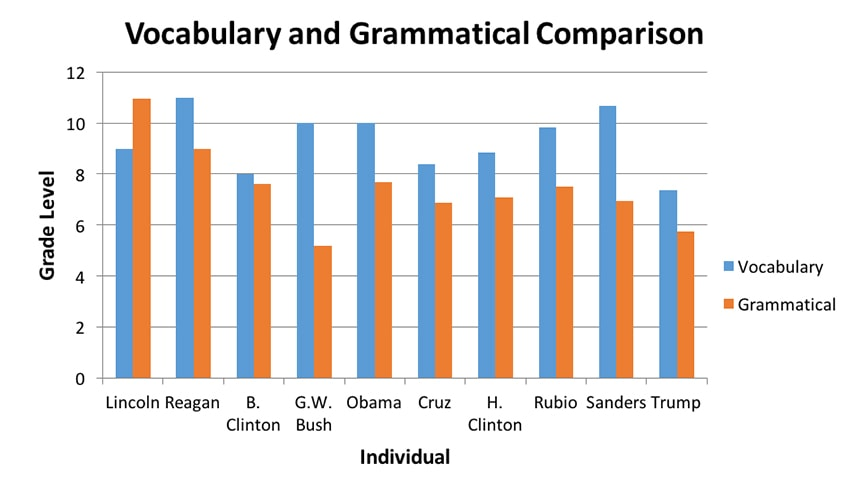
First of all, education is extremely important for the individual.  Most of the stuff that we learn in school tend to be prerequisites for certain degrees in college. High school level math is often a prerequisite for college-level math, which is required for most STEM degrees. Getting a good STEM degree can allow people to have lucrative jobs. But any degree builds on the education that we received in school, one way or another. We also need education in order to understand most things about the government. The chart below shows the vocabulary and grammatical level of the speeches of several candidates for US president. 

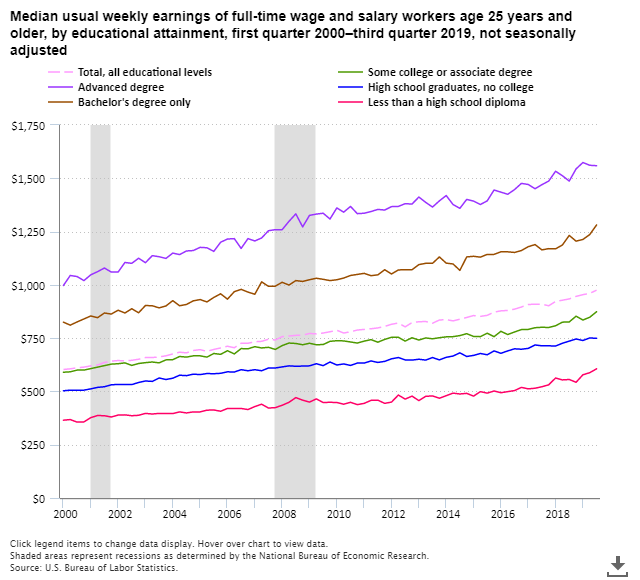
With the exception of Donald Trump’s speech, all of these speeches are at a high school reading level. If someone didn’t go to school and they only know how to read and write at a basic level, they’re going to have a really hard time understanding what these candidates are saying. If they do “understand” it, they’re most likely going to misinterpret it and vote against their own interests. According to an article from the National Center of Biology Information, people who are less educated are more likely to believe conspiracy theories. This can have really adverse consequences for the individual. Look at the people who attacked the US Capitol because they believed that Trump’s election was a fraud. People, who otherwise might have been reasonable, literally turned to terrorism because they believed in a conspiracy theory Education also makes people much less likely to be poor. The chart below from the Federal Bureau of Labour perfectly explains this.Workers without high school diplomas only earned 62% as much money as workers with high school diplomas. Workers with a Bachelors’s degree over 50% more than workers with just a high school diploma. There are more details in the chart. But the idea is that income correlates heavily with the level of education that one receives. People who are poorer are much more likely to be incarcerated. Adults in poverty are three times as likely to be put in jail as everybody else. In conclusion for this portion, more education leads to more income which leads to less poverty and lower willingness to commit crimes.

Educating our citizens also really helps society as a whole. This ties heavily with the first portion. Societies with less crime and less poverty tend to be better for everyone. Societies with lower education rates tend to deteriorate pretty quickly. The Ottoman Empire, for example, failed to educate its citizens. The literacy rate of the empire never went above 15%. This caused them to have a shortage of skilled workers. When the Industrial Revolution happened in Europe, the Ottomans simply didn’t have enough skilled workers to be able to build factories and machines, causing them to be unable to compete with the other European empires, ultimately leading to their demise.  Note that lack of education was not the only factor in their collapse, and maybe was eclipsed by them losing WW1. But it played a big part. Conversely, when education became the norm in western countries, we saw a lot of advancements in technology such as steam engines, the telegraph, the automobile, and more. Overall, education allows society to be stable and advance, but lack of education can cause instability and for society to crumble.

As you can see, education is very important. It not only can uplift individuals and keep them out of poverty, but it also allows society to function properly. Without education, society, as we have it today, would be impossible.

No Pain, No Gain

Have you ever thought what Benjamin Franklin thought when he flew a kite during thunder, with a metal key tied to it? Everyone thought he was crazy and was going to be hurt, but he knew that if he succeeded, he would have invented electricity.


Like him, there are many other cases where people have to endure pain to gain something. We can’t achieve anything without hardships and struggle. One has to go through some pain to reach the specific target. 

 
Like, if one wants a healthy body, he/she must earn it by going through the pain of the exercise. If one wants to eat, there needs to be some work done in the form of cooking. If one wants to live in luxury, he/she needs to work and earn it.
 

Success is always achieved when you work towards it, and prayers alone cannot help you make it. Moreover, the things which come in your life without any pain or struggle will go back instantly without giving you the proper benefits.


So everyone should work hard and never lose hope. Otherwise, you will not be able to survive in this world.

Thank You!!

The History of New Year Resolutions

A New Year starts with a New Resolution. As we are coming to the end of 2020,I decided to look into the History of New Year Resolution. So, buckle up! We are going about 4000 years back!


The ancient Babylonians are said to be the 1st people to make resolution during New Years. Back then in Babylon, a year started by mid-March, when crops were planted. During this time, The people choose new kings, repay debts and return borrowed things.


A similar thing was going on in Rome, when Emperor Julius Caesar was king. He established January 1 as the beginning of a New Year. Ancient Romans used to offer sacrifices to Janus, the 2 faced God.


Even the early Christians used to have resolutions. They used to wish to be better than the past year. They also had New Year Eve and watch night services. People would stay till midnight in church to begin the New Year in prayer.


This year, We are not able to celebrate New Year like this, but At least, lets begin 2021 with a fresh resolution!!

Daedalus-An Example of Pride and Fall

“Oh my wings! See my two wings!”


These were probably the last words of Icarus, the son of the proud craftsman, Daedalus.


Wait! You must be thinking,”What is all this story of wings, last words, Icarus?” Well, my friends, let us go back in time to understand the story of wings.


Once upon a time, there lived a proud architect named Daedalus. He was so proud of himself that he pushed his own nephew from his balcony for being a good craftsman like his uncle. He was SO stupidly proud of himself that he thought that with his skills, he was above all Gods. Little did he knew what was in store for him.


One day, King Minos of Crete invited him to his kingdom for a task. The King wanted to build a palace with a very difficult maze (The Labyrinth) under it in which the Minotaur could be imprisoned (The Minotaur was a monster with the head of a bull and a human body).


Daedalus brought his son, Icarus, with him. They lived on Crete until the maze and palace were complete. Daedalus went to the king and told him he wanted to leave the island. Minos was furious. He told Daedalus that he would never leave the island.


Daedalus and his son, Icarus were now trapped on the island.There, his crafty brain worked hard for a way to escape. He decided that he would make wings out of wax and feathers and he and Icarus would fly back to the mainland.


Now, lets take a break. Here, Daedalus is showing his pride. Back in the day, the Gods did not like it when humans tried to act like them by overcoming their mortal limits. In ancient Greek culture, acting like a God was called ‘hubris’, and it was often severely punished. As flying was a ‘Gods Only Right’, Daedalus was a ‘hubris’.


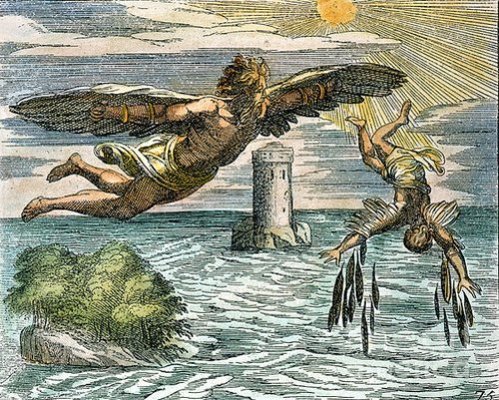
Now, back to the story. Daedalus told Icarus to collect all the feathers he could. The glued them onto two frames with wax. Daedalus and Icarus went to the top of a cliff and strapped on the wings. Before they flew off the mountain, Daedalus warned Icarus of two things, 1. No going near the Sun, and 2. No going near the sea.


They ran towards the edge of the cliff and flapped their wings. They flew! Daedalus has done the impossible! Alas! This angered the Gods!


Icarus was beaming with happiness and pride and began to fly higher and higher. “Remember what I said. Don’t fly too close to the sun,” Daedalus shouted after Icarus. Unfortunately, it was too late. The wax began to melt. Icarus flapped his wings madly but the feathers began to fall off his wings. He fell into the sea and drowned! Daedalus was heart broken. 


With great sorrow and humbleness, Daedalus reached Sicily (Holy city of Apollo) and built a temple for Apollo. Here, Daedalus didn’t reach Sicily by accident, rather he understood his folly and built he temple for The Sun God, the cause of Icarus’ demise, accepting his inferiority.


Now, if you have read the entire story carefully, you would notice that in Daedalus’ life, he had caused the fall of two young men, one being his nephew, and the other, his son Icarus. But the difference between these falls were that one made him prouder, while the other made him humble.


If Daedalus had not been so proud of himself, he would still have his son. And this is a lesson to all those proud people out there, who thinks high about themselves. It is good, but to an extend. So, let us not be ‘hubris’ like Daedalus.

The True Essence of Life: Happiness

Once lived a troubled king who wished to unlock the true essence of life. Many tried answering, but none of the responses satisfied the king. He felt the need to consult someone wise: the old saint living in the forest. 

It was a long-distance, and the sun was shining brighter than ever. The king had traveled miles to meet the saint. The now dehydrated king looked desperately around for water. Just as he was going to give his hopes up, he found a well nearby and quenched his thirst. 

He thanked his stars, and as he was going to continue his journey, something struck his mind. He was happy! Happy because he quenched his thirst. It dawned upon him that the true meaning of life is happiness. What is it exactly?

Some define it as immense satisfaction when something good happens. Some say it’s when you make big, or when you get your desired things. For the rich, it might be when they visit exotic places. For the poor: it might be when they have a shade on them. Happiness is something commonly seek.

Happiness isn’t something that can be defined by words. It’s raw emotion, something that comes from within. It’s common. Everybody experiences it, yet we can’t describe it. Every person defines it in his/her manner. In whatever means you may define it; the truth is that it is vital for a healthy and prosperous life. 

Happiness. Such a simple word, isn’t it? Yet something so complicated that millions fail to understand. Finding happiness in this materialistic world is the main reason for this failure. No amount can buy you your happiness, whether be the favorite thing you desire or the person you love the most, or the career you build, unless and until you feel it within yourself. 

“If one speaks or acts with a pure thought, happiness follows one, like a shadow that never leaves.” In other words, happiness is a state of mind. It is not something that happens to us, but a deliberate decision to choose happiness day in and day out, regardless of the circumstances.

“Happiness is not something ready-made. It comes from your actions.” – His Holiness The Dalai Lama.

Cultivating happiness is an easy task. To be content and happy with whatever you have and yourself takes time and patience. We should try to appreciate the people and things in our lives. At the end of the day, they are the ones who matter the most in our lives.

Cast aside your past, and look forward to a beautiful future. Learn to live today with more happiness than yesterday and forget about your past sadness for a harmonious life. Be grateful for the things you have.

Try to find goodness in every situation, and accept the things that already happened, whether good or bad. Never forget to choose merrier and positive people to be closer to you so that their vibes will also help you in becoming one too. 

At times you may feel low, but do not ever forget that you have people who love you. Never hesitate to ask for help. It’s a long journey, but implementing these rules in our lives sure does help! Happiness is not something created, it’s generated.

You saw how a simple thing such as water could please a king who had everything. It wasn’t the water that did the trick, but it was the king who learned to find good in little things. The happiness of your life depends on the quality of your thoughts. We must understand that happiness is nothing more than the state of a person’s mind. Our thoughts channel our emotions. Therefore, we must work on having only positive energy, and this can only be done when we see life in a positive light. There’s always a reason to be happy.

“There is no path to happiness. Happiness is the path.” 

Life is a beautiful adventure. Cherish and worship it. Once a moment is gone, it never comes back. Be happy and enjoy your life with your loved ones. Happiness is truly the true essence of life!

Generating Confidence

Reneesa Kumar

Wait a minute, before we go to the depth of this topic. I have one question for you all. Have you ever been to any situation where you feel your confidence was low? Well, their many cases we face like weak in a subject, etc. Now the question arises, what is exactly Confidence? Actually, even I don’t know what is confidence but, in my experience, I think, Confidence is your belief in your ability to figure things out. As you know we need confidence in ourselves so I am going to tell you 5 steps to have more confidence in your life. 

  1. Decide You Need No Reason to be more Confident – You don’t need 50 peoples to tell you are amazing or beautiful. You have to just say to yourselves “You know what today we lift my head up a little bit, you know today I’m gonna give myself a little bit of credit. I am just gonna be confident. I am gonna walk into this room and stand tall as if I was an incredibly confident person for no reason.” That’s the power of intention, it’s the power of self – directed human being that we get to choose how we want to feel you could be happy right now for no reason. You don’t need 50 things to make you happy. You have to just sense the moment feel grateful for life. 
  2. Integrity – Integrity Being aligned with who you are your values your beliefs and your dreams. For example – Keeping your promises even if it takes extra effort.

3. Competency – A competency is the capability to apply or use a set of related knowledge, skills, and abilities required to successfully perform. For example – Teamwork, Responsibility, etc.

4. Momentum – Momentum is the key to Confidence. When we stop having momentum in our life, we often feel lost or confused. For example – Do something tiny every day.

5. Community – You know that we need people around us and who are supportive, positive, and buoyant and who appreciate our sense of aliveness, joy, and happiness in life.

I hope these 5 steps will boost your confidence. “In fact, the confidence of the people is worth more than money.”– Carter G. Woodson. With this, I would like to end my speech. I hope you enjoyed it.

Quantum Computing

So what is Quantum Computing?
Here is the definition: Quantum computing is the use of quantum phenomena such as superposition and entanglement to perform computation. Computers that perform quantum computations are known as quantum computers.
Why is Quantum Computing important?
Quantum computing is said to be more power efficient than modern computing through the use of quantum tunnelling. They are expected to reduce power consumption from 100 to 1000 times. Quantum computers could speed up the learning process of AI, reducing thousands of years of learning to mere seconds.

Now Lets See How It Works
A quantum computer works with particles that can be in superposition. Rather than representing bits such particles would represent qubits, which can take on the value 0, or 1, or both simultaneously.

What does a Quantum Computer do?
A quantum computer encodes information into quantum states and computes by performing quantum operations on it. There are several tasks for which a quantum computer will be useful.
The new goal is to manipulate and control quantum systems so that they behave in a prescribed way. A quantum computer encodes information into quantum states and computes by performing quantum operations on it. There are several tasks for which a quantum computer will be useful.

How does quantum computing exactly work?
Quantum computers perform calculations based on the probability of an object’s state before it is measured instead of just 1s or 0s which means they have the potential to process exponentially more data compared to classical computers. A single state such as on or off, up or down, 1 or 0 – is called a bit.

Who is behind Quantum Computing and where is it found?
In 1998 Isaac Chuang of the Los Alamos National Laboratory, Neil Gershenfeld of the Massachusetts Institute of Technology (MIT), and Mark Kubinec of the University of California at Berkeley created the first quantum computer (2-qubit) that could be loaded with data and output a solution.

Can Quantum Computing change the world? Let’s take a look
Quantum computing could change the world. It could transform medicine, break encryption and revolutionise communications and artificial intelligence. Companies like IBM, Microsoft and Google are racing to build reliable quantum computers.

Thank You For Reading

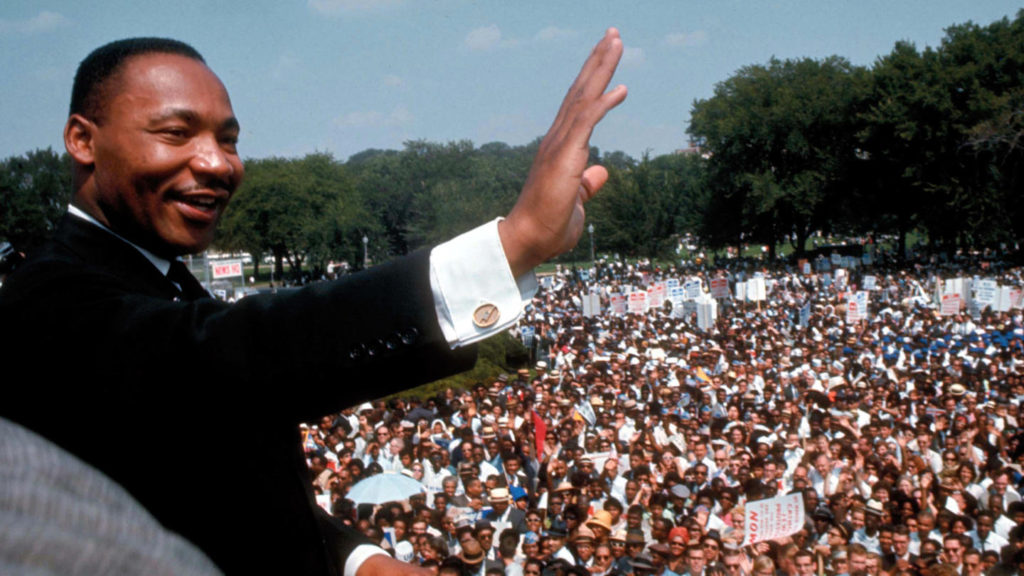
“Quietly endure, silently suffer and patiently wait.”

“Quietly endure, silently suffer and patiently wait.” -Martin Luther King Jr.


These were the words from Martin Luther King Jr., a man with the story of suffering for his country, USA. After years, his hard work and sufferings had meaning and was not futile.


This quote reminds me of an incident where I had to struggle to attain success. Last year, I had to workout for my Black Belt exam. This was 3 months before my exams. Unfortunately, I sprained my foot. I was devastated. My parents comforted me, but I couldn’t believe I sprained my foot, before my exams.


But I didn’t give up that easily. Every day, I would strengthen my foot to stand up and walk. At first, it was dreadful. But, after some days, I got used to this pain. Then I started doing some running, and then some warm-ups. But, I still waited for it to heal. With just a month left for the exams, I felt better, thought it was still paining.


I studied the theoretical part and passed. Then came the physical part. I only had 4 days to learn everything for the exams. I went to my Sensei’s house for further training. At last, the day came. 


On 2nd December, 2019, I passed my Black Belt exams with flying colors. I got an ‘A’ ! Everyone was proud of me. 


From this incident, I learned 2 things-:                                                                         

1. NEVER EVER kick near the wall!

2. If I can do this with a sprained foot, I can do almost everything. 

You Can Do It!!

Benefits of Time Management

Anytime have you have been given a task to complete, but thy feel that you are running out of time.You look at clock then again do work,again look at clock. Let’s face it,this is majorly due to lack of time management or not doing your things on time. How does time management help you.I will tell 6 points on benefits of time management

Reason#1

It improves your self-discipline Let’s face it, if you have good time management skills, the chances are that you’re highly self-disciplined. You’re the kind of person who stops procrastination dead in its tracks and drives forward to achieve your goals. This self-discipline improves other areas of your life too, from your career to your relationships. In other words, the better you get at time management, the better your self-discipline will be. This will make you more successful at meeting goals in all areas of your life. Before , when I had no idea of time management , I always did my work at last moment some time even got delayed in work and even missed the submission date many times. Got quite marks cut, felt like I had no discipline. Only till when I started applying time management in my life, I made fix routines of work, did a bit of the assignment everyday and on final day of submission, I felt relaxed and more confident.

Reason#2

It improves the quality of your work Having good time management skills doesn’t mean that you pull all-nighters to meet a deadline. It means that you manage your time effectively and space out your work while keeping your regular sleeping routine. According to research, almost half of Americans regularly get insufficient or low-quality sleep and report that this interferes with their daily lives. You need a good night’s sleep if you want to produce quality work; good time management skills will help you get the rest you need. During fourth standard I always got my exam schedule 2 weeks before the start of exam I completely relaxed till eve of the exam.That night I always took out my book first time to get ready for the exam of next day. I woke up till late night. Then, I started using different method . I started studying everyday and at evening before exam I did final revision , I felt relax, confident ,got more sleep ,Overall I felt great for next day.

Reason#3

Winding down is essential Between work, family commitments and running errands, most of us don’t get enough time to relax. If you want to have enough time to unwind, relax and prepare for the following day, good time management skills are essential. You need to know how to organize your work times and your break times to recuperate mentally and physically after a long day’s work. My friend studies a lot, he does many other stuffs like drawing, singing and many more things. He never got time to relax himself ,he used to sit at 9 and get up at 5.He got stressed and irritated, then I suggested him to take 10 mins break after every 2 hours. might be walk in home.He did that and now he feels better then ever eventhough he did not shift his time of 9am to 5pm

Reason#4

It reduces stress Take a few moments to reflect on your day: Do you feel as though you’re always busy, but accomplish little? Is there something that’s been keeping you up at night with worry? Are you unable to complete your work? If you answered “yes” to one or more of those questions, you’re likely feeling stressed. When you don’t feel as though you have control of your time and are always frantically working to meet deadlines, it’s highly likely that your health is suffering. Time management skills can help to reduce or even eliminate stress. Good time management skills will make you more productive, helping you to meet your deadlines and lowering your stress levels.

Reason#5

It opens up new possibilities One of the hidden dangers of poor time management is that it kills your chances of broadening your horizons and trying out new things. If you go through life rushing from one task to the next, you never have the chance to explore different opportunities. With more free time, you may be able to volunteer at a local charity or help someone in need. It’s hard to put a dollar value on these types of tasks but they are innately fulfilling and enriching. My friend, who was quite busy everyday felt sad. He wanted to learn new stuffs, wanted to  learn new things but did not have time to he always felt he wanted to learn but lack of time was the reason. But when he arranged or managed his time ,he saw how much time he had left.He started to learn new things in that time 
Reason #6
. It helps your personal relationships Good time management skills are essential to having strong and productive relationships. The more free time you have to spend with your friends and family, the better your relationships will be. You’ll make better decisions, have better ideas, and people around you will notice. Stronger personal relationships will enhance all aspects of your life.

Now also do you really feel that you should not manage your time. Which would help you even more. That's up to you I would like to end with a quote “

One reason so few of us achieve what we truly want is that we never direct our focus; we never concentrate our power. Most people dabble their way through life, never deciding to master anything in particular.” – Tony Robbins

Greyhounds

Greyhound At a glance

Size:
Weight Range:

Male: 65-70 lbs.
Female: 60-65 lbs.

Height at Withers:

Male: 30 in.

                                                                                  Female: 28 in.                                                                                                                                                                           Features:                                                                                             Dolichocephalic (long face)

Expectations:
Exercise Requirements: 20-40 minutes/day
Energy Level: Laid back
Longevity Range: 10-13 yrs.
Tendency to Drool: Low Tendency to Snore: Low
Tendency to Bark: Low
Tendency to Dig: Low Social/Attention Needs: Moderate
Bred For:
Coursing hares

Coat:
Length: Short
Characteristics: Flat
Colors: All colors accepted
Overall Grooming Needs: Low

Club Recognition:
AKC Classification: Hound
UKC Classification: Sighthounds & Pariahs
Prevalence: Common

Thank You For Reading

Contributions of Albert Einstein

I am sure that every single person who is reading this has heard of Albert Einstein in one way or another. You probably have seen his last name being used as a synonym of genius, smart, or other words to describe someone intelligent. Maybe, you’ve even heard of E=mc² as one of his biggest and most important achievements. But what do all of these things mean? There are way too many people who know about Einstein as a genius, but they don’t know why he’s so famous. There are at least a thousand people alive right now who have a higher IQ than Einstein. Einstein himself considered Niccola Tesla to be smarter than him. The reason Einstien is so famous is because of his contributions to humanity, which I’ll explain in this blog. More specifically, I’ll be explaining his two most important contributions to humanity that affect us every day.

The first, arguably the most important contribution is Einstein’s Theory of Relativity. Please note that this is an umbrella term that contains many sub-theories. With that being said, I think the biggest use of this theory is in GPS systems. Einstein discovered that gravity ever-so-slightly slow time down. (think microseconds). One of the components of GPS systems is that satellites need to have an extremely precise idea of time to get the location accurately. The time change by the lack of gravity that satellites experience becomes a big problem now. Luckily that difference is accounted for so we’ll be fine. But if Einstein hadn’t discovered that law, GPS wouldn’t be impossible. Next time you or your parents use GPS, remember that it’s Einstien and his imagination that helped make this possible. And yes, I meant it when I said his imagination. He sat for a while and thought up these theories. 

Another big contribution from Einstien was the discovery of the equation E=mc².  I won’t go into the details of the principles behind this equation or even what each of the variables means. I’ll instead go into the effect of this law. The effect of this law is that seemingly small objects contain an enormous amount of energy at an atomic level. Because of this law, a walnut has enough energy to power the entirety of New York City for around 52 days, though tapping that energy is only possible in certain elements as of right now.  The discovery of this is what allowed nuclear power to be invented. The most well-known effect of this is the invention of the nuclear bomb. The world might have been in some kind of war right now if countries weren’t scared about each other’s nukes. But there are other uses to this equation as well, such as nuclear power. France, for example, gets 75% of its electricity from nuclear power plants. Next time you hear about anything nuclear, remember that it’s Einstein who made it possible.

There are definitely more things that Einstein helped to discover. But these two things are by far the two most tangible. Einstein was no doubt a genius. But it’s disrespectful to him to only remember that him as some crazy smart guy. Because he’s one of the most important figures of the 20th century, perhaps even in history. There’s no telling of how this world would be(if it would even exist) without him. Thanks for reading my blog!

Life lessons to learn from ramayan

Is Ramayana an mere epic on Lord Ram or a lesson for all of us. I think, it is a lesson for me. Why? How? When I read for first time I learnt many things I will be telling 4 of them

Ramayan रामायण 3D Cartoon In Hindi 2019 Cartoon in Hindi Full Movie 3D Animated  Cartoon Motu Patlu - YouTube
Ramayan

Honour Your Word

One of the basic but strong messages given by Ramayana and the life of Lord Rama is rendering value to your own word. No matter what price you need to pay, but honouring your word is equivalent to worshipping the God within you. In Ramayana, King Dasharatha sent his eldest son, Lord Rama on exile to honour the promise he gave to his wife Kaikeyi without knowing that she would make such a demand in a bid to pronounce her son Bharath as the next King of Ayodhya. But a man of principles like Lord Rama didn’t question his father and without any second thought, he left the empire and his princely life to live life like an ordinary man for the next 14 years in forests. We learnt that it is not only our word but are parents too that we need to respect,no mater what hardship we need to suffer.

Pertinence of righteousness

Following the path of dharma, Maryada Purushottam Lord Rama took every step in his life to be truthful and righteous. He left the kingdom of Ayodhya when he was the true successor to the throne just to honour his father’s word. On the quest one of his subjects, he even asked Sita to go through Agni Pariksha (an ordeal of fire) to prove her sanctity. It is said that Lord Rama was in grief to have asked Sita to undergo this terrible test but to protect her respect and to prove her purity in front of his whole kingdom, he had to take this action, which he thought ,was right. We learn that no matter what you need to do always be truthful and righteouss .

Adhere To Your Dharma

The Survanshi dynasty of which Lord Rama belonged was known to give birth to kings of great valour. The event when his subjects objected on Sita’s purity, Lord Rama asked her to leave the kingdom while being disheartened, shows that Lord Rama believed in following his dharma of keeping his subjects happy. He sacrificed his marital life for the sake of his subjects. Though many people won’t consider this right but no matter what, we must train our minds to follow good principles that is advantageous for everyone concerned. We must stop letting our mind dwindle and be biased to situations .

Always follow dharm Be A Gentle and compassionate human being

Being in the mortal form, Lord Rama lived a princely life till he grew up but this king of Suryavanshi clan did not hesitate while eating fruits (ber), which were already tasted by a poor old woman named Shabri. In another instance, when his whole Vanarsena was busy building a bridge towards Lanka, he saw a squirrel putting in his best efforts too. To recognise his immense contribution in finding Sita, Lord Rama picked the tiny being from his hands and gently patted it with compassion. In our life, we too must never discriminate between people or judge them by their looks. Also the cruelty we show towards animals is far away from act of compassion. To conclude.

I would say that ramayan is a manual for human life. It teaches us the way to live and is applicable to everyone whether be a king or a commoner . As it teaches the concept of service leadership. I recommend everyone, to not only read ramayan but to study it, analysed it and understand it.

HAPPY READING

What is an Arduino

What is an Arduino ? 

Arduino is an open-source hardware and software company, project and user community that designs and manufactures single-board microcontrollers and microcontroller kits for building digital devices. Its hardware products are licensed under a CC-BY-SA license, while software is licensed under the GNU Lesser General Public License (LGPL) or the GNU General Public License (GPL), permitting the manufacture of Arduino boards and software distribution by anyone. Arduino boards are available commercially from the official website or through authorized distributors.

Arduino board designs use a variety of microprocessors and controllers. The boards are equipped with sets of digital and analog input/output (I/O) pins that may be interfaced to various expansion boards (‘shields’) or breadboards (for prototyping) and other circuits. The boards feature serial communications interfaces, including Universal Serial Bus (USB) on some models, which are also used for loading programs from personal computers. The microcontrollers can be programmed using the C and C++ programming languages, using a standard API which is also known as the “Arduino language”. In addition to using traditional compiler toolchains, the Arduino project provides an integrated development environment (IDE) and a command line tool developed in Go.
The Arduino project started in 2005 as a tool for students at the Interaction Design Institute Ivrea in Ivrea, Italy, aiming to provide a low-cost and easy way for novices and professionals to create devices that interact with their environment using sensors and actuators. Common examples of such devices intended for beginner hobbyists include simple robots, thermostats and motion detectors.

The name Arduino comes from a bar in Ivrea, Italy, where some of the founders of the project used to meet. The bar was named after Arduin of Ivrea, who was the margrave of the March of Ivrea and King of Italy from 1002 to 1014.

Arduino Shields
Arduino and Arduino-compatible boards use printed circuit expansion boards called shields, which plug into the normally supplied Arduino pin headers.[51] Shields can provide motor controls for 3D printing and other applications, GNSS (satellite navigation), Ethernet, liquid crystal display (LCD), or breadboarding (prototyping). Several shields can also be made do it yourself (DIY).

Arduino Hardware
Arduino is open-source hardware. The hardware reference designs are distributed under a Creative Commons Attribution Share-Alike 2.5 license and are available on the Arduino website. Layout and production files for some versions of the hardware are also available.

Most Arduino boards consist of an Atmel 8-bit AVR microcontroller (ATmega8, ATmega168, ATmega328, ATmega1280, or ATmega2560) with varying amounts of flash memory, pins, and features.[28] The 32-bit Arduino Due, based on the Atmel SAM3X8E was introduced in 2012.[29] The boards use single or double-row pins or female headers that facilitate connections for programming and incorporation into other circuits. These may connect with add-on modules termed shields. Multiple and possibly stacked shields may be individually addressable via an I²C serial bus. Most boards include a 5 V linear regulator and a 16 MHz crystal oscillator or ceramic resonator. Some designs, such as the LilyPad, run at 8 MHz and dispense with the onboard voltage regulator due to specific form-factor restrictions.

Different Arduino Boards
There are different Arduino boards which are following,

Arduino UNO (R3)
LilyPad Arduino
Red Board
Arduino Mega (R3)
Arduino Leonardo

Arduino Uno R3
The Arduino UNO R3 is a new board and by comparing with the previous Arduino boards it has some additional features. The Arduino UNO uses the Atmega16U2 instead of 8U2 and it allows faster transfer rate & more memory. There is no need of extra devices for the Linux & Mac and the ability to have the UNO show up as a keyboard, mouse, joystick, etc.

The Arduino R3 adds SDA & SCL pins which are next to the AREF and in addition, there are two pins which are placed near the RESET pin. The first pin is IOREF, it will allow the shields to adapt to the voltage from the board.

The other pin is not connected and it is reserved for the future purpose. The working of Arduino R3 is by all existing shields and it will adapt new shields which use these additional pins.

LilyPad Arduino
This board is an Arduino Programmable Microcontroller and it is designed to integrate easily into an e-textiles & wearable projects. The other Arduino boards have the same functionality like lightweight, round package designed to minimize snagging and profile, with wide tabs that can be sewn down and connected with conductive thread.

This Arduino board consist of an Atmega 328 with the Arduino bootloader and to keep it as a small minimum external component are required. The power supply of this board is 2V to 5V and offers large pin-out holes that make it easy to sew and connect. Each pin is connected to positive and negative terminals and to control the input & output devices like light, motor, and switch.

This Arduino technology was designed and developed by Leah Buechley and each LilyPad was creatively designed to have large connecting pads to allow them to be sewn into clothing. There is an available of various input, output, and sensor boards and they are washable.

Arduino Mega (R3)
The Arduino Mega is a type of Microcontroller and it is based on the ATmega2560. It consists of 54 digital input/output pins and from the total pins 14 pins are used for the PWM output, 16 pins are used for the analog inputs, 4 pins are used for the hardware serial port of the UART. There are pins like crystal oscillator of 16 MHz, USB connection, RESET pin, ICSP header, and a power barrel jack

This Arduino Mega is also having SDA and SCL pins which are next to the AREF. There are two new pins near the RESET pin which are IOREF that allow the shields to adapt to the voltage provided by the board. The other is a not connected and is reserved for future purposes.

Features of the Arduino Mega (R3)
ATmega2560 Microcontroller
Input voltage – 7-12V
54 Digital I/O Pins (14 PWM outputs)
16 Analog Inputs
256k Flash Memory
16Mhz Clock Speed

Arduino Leonardo
The Leonardo Arduino board is a Microcontroller board and it is based on the ATmega32u4 data sheet. This Arduino board has 20 digital input/out pins and from the total number of pins, seven pins are used for the pulse width modulation output and 12 pins are used as an analog input and there are the 16MHz crystal oscillator, a micro USB connection, RESET pin and power jack.

It contains everything needed to support the microcontroller; simply connect it to a computer with a USB cable or power it with an AC-to-DC adapter or battery to get started. The Leonardo differs from all preceding boards in that the ATmega32u4 has built-in USB communication, eliminating the need for a secondary processor.

This allows the Leonardo to appear to a connected computer as a mouse and keyboard, in addition to a virtual (CDC) serial COM port. It also has other implications for the behavior of the board; these are detailed on the getting started page.

Arduino Red Board
The Arduino red board is programmed by using the USB cable of mini-B with the help of Arduino IDE software.

Without any modifications in the security system there, it will work in Windows8 OS. The Arduino red board is more constant because USB and FTDI chips are used and they are flat on the back.

Creating it is very simple to utilize in the project design. Just plug the board, select the menu option to choose an Arduino UNO and you are ready to upload the program. You can control the RedBoard over USB cables using the barrel jack.
That is everything you need to know about the Arduino

Thank You For Reading !!!!

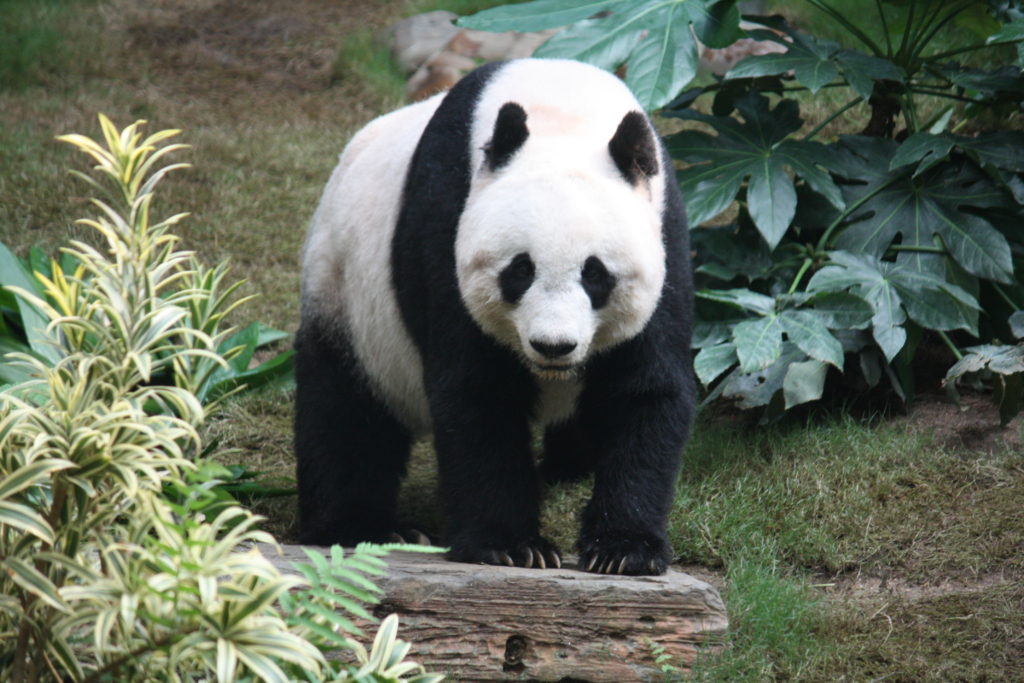
GIANT PANDAS

                                                                          General Information                                                                                The charismatic giant panda is a global conservation icon. Thanks to decades of successful conservation work, wild panda numbers are starting to recover, but they remain at risk. Human activities continue to be the biggest threats to their survival. An extensive giant panda nature reserve network exists, but one-third of all wild pandas live outside of protected areas in small isolated populations.

Pandas typically lead a solitary life. They’re excellent tree climbers, but they spend most of their time feeding. They can eat for 14 hours a day, mainly bamboo, which is 99% of their diet (though they sometimes eat eggs or small animals too).

Giant pandas are living proof that conservation efforts work.

WHERE GIANT PANDAS LIVE
Wild giant pandas could once have been found throughout eastern and southern China, northern Vietnam and northern Myanmar. Now the pandas range is restricted to just six isolated mountain ranges in Gansu, Shaanxi and Sichuan Provinces in south-central China.

They live mainly in deciduous broadleaf, mixed conifer and sub-alpine coniferous forests between elevations of about 1,200-3,400 metres.

WHY GIANT PANDAS ARE SO IMPORTANT
Giant pandas help to keep their mountain forests healthy by spreading seeds in their droppings, which helps vegetation to thrive.

The panda’s forest environment is also important for local people – for food, income and fuel for cooking and heating. Giant pandas live in the mountain catchment areas of the Yangtze and Yellow rivers, whose river basins are the economic heart of China, home to over half a billion people.

Panda habitat rivals the highest biodiversity of any ecosystem in the world. It’s also vitally important for other threatened and endangered species, including golden snub-nosed monkeys, takins, red pandas and snow leopards.

By protecting pandas we’re helping conserve the wider environment, for the people and wildlife that depend on it.

Thank You For Reading !!!!

What is Evolution

What is Evolution

In biology, evolution is the change in the characteristics of a species over several generations and relies on the process of natural selection.

The theory of evolution is based on the idea that all species are related and gradually change over time.
Evolution relies on there being genetic variation in a population which affects the physical characteristics (phenotype) of an organism.
Some of these characteristics may give the individual an advantage over other individuals which they can then pass on to their offspring.

What is natural selection?
Charles Darwin’s theory of evolution states that evolution happens by natural selection.
Individuals in a species show variation in physical characteristics. This variation is because of differences in their genes?.
Individuals with characteristics best suited to their environment are more likely to survive, finding food, avoiding predators and resisting disease. These individuals are more likely to reproduce and pass their genes on to their children.
Individuals that are poorly adapted to their environment are less likely to survive and reproduce. Therefore their genes are less likely to be passed on to the next generation.
As a consequence those individuals most suited to their environment survive and, given enough time, the species will gradually evolve.

Different types of evolution
Convergent evolution
When the same adaptations evolve independently, under similar selection pressures.
For example, flying insects, birds and bats have all evolved the ability to fly, but independently of each other.

Co-evolution
When two species or groups of species have evolved alongside each other where one adapts to changes in the other.
For example, flowering plants and pollinating insects such as bees.

Adaptive radiation
When a species splits into a number of new forms when a change in the environment makes new resources available or creates new environmental challenges.
For example, finches on the Galapagos Islands have developed different shaped beaks to take advantage of the different kinds of food available on different islands.

Thank You For Reading !!!!

EFFECT OF SOCIAL MEDIA ON TEENS

Surveys show that ninety percent of teens ages 13-17 use social media. Seventy-five percent report having at least one active social media profile, and 51% visiting a social media site at least once daily.

Hi. I’m Reneeka, and today’s topic is all about the ways social media affects teens. 

I hardly think an introduction to social media in today’s online generation would be necessary. It’s simple: 1 out of every four teens is an avid social media user, using at least two different social media each day. 

For folks who don’t have a clue about what social media is, here’s the definition for it. As described by the dictionary, it is a website and application that enables users to create and share content or to participate in social networking. 

It’s a common belief that overrated platforms like TikTok or YouTube are the only examples of social media. In reality, any app that allows you to communicate with others and express yourself is social media. It includes your online school too.

The grasp and dependence on social media of teens far exceed that of many adults. Go figure. Hence, it is crucial to understand how it mentally impacts us. Several health issues develop as a result of too much time spent online.

What makes social media so “attractive”? A study by researchers at the UCLA brain mapping center found a distinct region of our brain becomes activated at the mere prospect of receiving likes. This reward region is particularly sensitive during the teen years, which could explain why teens are attracted to social media. 

Additional studies have established a link between depression and social media. Prolong use of social media may show a sign of depression or low self-esteem. According to a study, people who use more than seven social media platforms have more than three times the risk of depression than people who use two or fewer sites. 

Social networking leads to a deterioration in social activity and an increase in loneliness. You may argue that social media does provide a stage for communication, but you may as well know that humans are social creatures programmed for physical connection.

Social media, in a nutshell, is a fabrication of lies. Unfortunately, what most teens do not realize is that people post their “highlight reel” and usually hide their experiences. It creates a notion of perfectness and pressures teens to have perfect posts or images. Teens who place a priority on social media will often concentrate on showing how much they are having fun, rather than focusing on having fun! 

It takes a lot of time and effort to keep up with the unspoken rules and culture of each social media platform. As a result, this puts additional pressure on teens, which can cause feelings of anxiety. Some studies have found that the larger a teen’s social circle is online, the more feeling of pressure is. 

A study showed that one-fifth of teens “almost always” wake up during the night and log in to social media. It’s a proven fact that sleep is vital for development in children. Consequently, this sleep loss can lead to moodiness, a drop in grades, and overeating, as well as intensify existing problems like depression and anxiety.

While social media can be a fantastic place for keeping in touch with loved ones, it is not the same as face-to-face communication. Under forced circumstances, I’ve been chatting with my friends a lot lately. But if you ask me to do the same, but face-to-face, let say through a virtual meeting, I would fail miserably. 

See? That’s what I’m trying to indicate. Many teens spend so much time online that they forget to talk to the person in front of them! As a result, teens risk having relationships that are not deep or genuine.

So, what’s the solution? You don’t have to quit social media; you will have to learn to use it better! Because so much brain development takes place during the teen years, we mustn’t neglect the impact of social media on us. We have the power of using it, make sure it doesn’t use you!

Thank you!

Pandemics Over The Years

Pandemics That Changed History
As human civilizations rose, these diseases struck them down.

In the realm of infectious diseases, a pandemic is the worst case scenario. When an epidemic spreads beyond a country’s borders, that’s when the disease officially becomes a pandemic.

Communicable diseases existed during humankind’s hunter-gatherer days, but the shift to agrarian life 10,000 years ago created communities that made epidemics more possible. Malaria, tuberculosis, leprosy, influenza, smallpox and others first appeared during this period.

The more civilized humans became, building cities and forging trade routes to connect with other cities, and waging wars with them, the more likely pandemics became. See a timeline below of pandemics that, in ravaging human populations, changed history.

Pandemics Of The History

430 B.C.: Athens
The earliest recorded pandemic happened during the Peloponnesian War. After the disease passed through Libya, Ethiopia and Egypt, it crossed the Athenian walls as the Spartans laid siege. As much as two-thirds of the population died.

The symptoms included fever, thirst, bloody throat and tongue, red skin and lesions. The disease, suspected to have been typhoid fever, weakened the Athenians significantly and was a significant factor in their defeat by the Spartans.

165 A.D.: Antonine Plague
The Antonine plague was possibly an early appearance of smallpox that began with the Huns. The Huns then infected the Germans, who passed it to the Romans and then returning troops spread it throughout the Roman empire. Symptoms included fever, sore throat, diarrhea and, if the patient lived long enough, pus-filled sores. This plague continued until about 180 A.D., claiming Emperor Marcus Aurelius as one of its victims.

250 A.D.: Cyprian Plague
Named after the first known victim, the Christian bishop of Carthage, the Cyprian plague entailed diarrhea, vomiting, throat ulcers, fever and gangrenous hands and feet.

City dwellers fled to the country to escape infection but instead spread the disease further. Possibly starting in Ethiopia, it passed through Northern Africa, into Rome, then onto Egypt and northward.

There were recurring outbreaks over the next three centuries. In 444 A.D., it hit Britain and obstructed defense efforts against the Picts and the Scots, causing the British to seek help from the Saxons, who would soon control the island.

541 A.D.: Justinian Plague
First appearing in Egypt, the Justinian plague spread through Palestine and the Byzantine Empire, and then throughout the Mediterranean.

The plague changed the course of the empire, squelching Emperor Justinian’s plans to bring the Roman Empire back together and causing massive economic struggle. It is also credited with creating an apocalyptic atmosphere that spurred the rapid spread of Christianity.

Recurrences over the next two centuries eventually killed about 50 million people, 26 percent of the world population. It is believed to be the first significant appearance of the bubonic plague, which features enlarged lymphatic gland and is carried by rats and spread by fleas.

11th Century: Leprosy
Though it had been around for ages, leprosy grew into a pandemic in Europe in the Middle Ages, resulting in the building of numerous leprosy-focused hospitals to accommodate the vast number of victims.

A slow-developing bacterial disease that causes sores and deformities, leprosy was believed to be a punishment from God that ran in families. This belief led to moral judgments and ostracization of victims. Now known as Hansen’s disease, it still afflicts tens of thousands of people a year and can be fatal if not treated with antibiotics.

1350: The Black Death
Responsible for the death of one-third of the world population, this second large outbreak of the bubonic plague possibly started in Asia and moved west in caravans. Entering through Sicily in 1347 A.D. when plague sufferers arrived in the port of Messina, it spread throughout Europe rapidly. Dead bodies became so prevalent that many remained rotting on the ground and created a constant stench in cities.

England and France were so incapacitated by the plague that the countries called a truce to their war. The British feudal system collapsed when the plague changed economic circumstances and demographics. Ravaging populations in Greenland, Vikings lost the strength to wage battle against native populations, and their exploration of North America halted.

1492: The Columbian Exchange
Following the arrival of the Spanish in the Caribbean, diseases such as smallpox, measles and bubonic plague were passed along to the native populations by the Europeans. With no previous exposure, these diseases devastated indigenous people, with as many as 90 percent dying throughout the north and south continents.

Upon arrival on the island of Hispaniola, Christopher Columbus encountered the Taino people, population 60,000. By 1548, the population stood at less than 500. This scenario repeated itself throughout the Americas.

In 1520, the Aztec Empire was destroyed by a smallpox infection. The disease killed many of its victims and incapacitated others. It weakened the population so they were unable to resist Spanish colonizers and left farmers unable to produce needed crops.

Research in 2019 even concluded that the deaths of some 56 million Native Americans in the 16th and 17th centuries, largely through disease, may have altered Earth’s climate as vegetation growth on previously tilled land drew more CO2 from the atmosphere and caused a cooling event.

1665: The Great Plague of London
n another devastating appearance, the bubonic plague led to the deaths of 20 percent of London’s population. As human death tolls mounted and mass graves appeared, hundreds of thousands of cats and dogs were slaughtered as the possible cause and the disease spread through ports along the Thames. The worst of the outbreak tapered off in the fall of 1666, around the same time as another destructive event—the Great Fire of London.

1817: First Cholera Pandemic
The first of seven cholera pandemics over the next 150 years, this wave of the small intestine infection originated in Russia, where one million people died. Spreading through feces-infected water and food, the bacterium was passed along to British soldiers who brought it to India where millions more died. The reach of the British Empire and its navy spread cholera to Spain, Africa, Indonesia, China, Japan, Italy, Germany and America, where it killed 150,000 people. A vaccine was created in 1885, but pandemics continued.

1855: The Third Plague Pandemic
Starting in China and moving to India and Hong Kong, the bubonic plague claimed 15 million victims. Initially spread by fleas during a mining boom in Yunnan, the plague is considered a factor in the Parthay rebellion and the Taiping rebellion. India faced the most substantial casualties, and the epidemic was used as an excuse for repressive policies that sparked some revolt against the British. The pandemic was considered active until 1960 when cases dropped below a couple hundred.

1875: Fiji Measles Pandemic
After Fiji ceded to the British Empire, a royal party visited Australia as a gift from Queen Victoria. Arriving during a measles outbreak, the royal party brought the disease back to their island, and it was spread further by the tribal heads and police who met with them upon their return.

Spreading quickly, the island was littered with corpses that were scavenged by wild animals, and entire villages died and were burned down, sometimes with the sick trapped inside the fires. One-third of Fiji’s population, a total of 40,000 people, died.

1889: Russian Flu
The first significant flu pandemic started in Siberia and Kazakhstan, traveled to Moscow, and made its way into Finland and then Poland, where it moved into the rest of Europe. By the following year, it had crossed the ocean into North America and Africa. By the end of 1890, 360,000 had died.

1918: Spanish Flu
The avian-borne flu that resulted in 50 million deaths worldwide, the 1918 flu was first observed in Europe, the United States and parts of Asia before swiftly spreading around the world. At the time, there were no effective drugs or vaccines to treat this killer flu strain. Wire service reports of a flu outbreak in Madrid in the spring of 1918 led to the pandemic being called the “Spanish flu.”

By October, hundreds of thousands of Americans died and body storage scarcity hit crisis level. But the flu threat disappeared in the summer of 1919 when most of the infected had either developed immunities or died.

1957: Asian flu
Starting in Hong Kong and spreading throughout China and then into the United States, the Asian flu became widespread in England where, over six months, 14,000 people died. A second wave followed in early 1958, causing an estimated total of about 1.1 million deaths globally, with 116,000 deaths in the United States alone. A vaccine was developed, effectively containing the pandemic.

1981: HIV/AIDS
First identified in 1981, AIDS destroys a person’s immune system, resulting in eventual death by diseases that the body would usually fight off. Those infected by the HIV virus encounter fever, headache, and enlarged lymph nodes upon infection. When symptoms subside, carriers become highly infectious through blood and genital fluid, and the disease destroys t-cells.

AIDS was first observed in American gay communities but is believed to have developed from a chimpanzee virus from West Africa in the 1920s. The disease, which spreads through certain body fluids, moved to Haiti in the 1960s, and then New York and San Francisco in the 1970s.

Treatments have been developed to slow the progress of the disease, but 35 million people worldwide have died of AIDS since its discovery, and a cure is yet to be found.

2003: SARS
First identified in 2003 after several months of cases, Severe Acute Respiratory Syndrome is believed to have possibly started with bats, spread to cats and then to humans in China, followed by 26 other countries, infecting 8,096 people, with 774 deaths.

SARS is characterized by respiratory problems, dry cough, fever and head and body aches and is spread through respiratory droplets from coughs and sneezes.

Quarantine efforts proved effective and by July, the virus was contained and hasn’t reappeared since. China was criticized for trying to suppress information about the virus at the beginning of the outbreak.

SARS was seen by global health professionals as a wake-up call to improve outbreak responses, and lessons from the pandemic were used to keep diseases like H1N1, Ebola and Zika under control

2019: COVID-19
On March 11, 2020, the World Health Organization announced that the COVID-19 virus was officially a pandemic after barreling through 114 countries in three months and infecting over 118,000 people. And the spread wasn’t anywhere near finished.

COVID-19 is caused by a novel coronavirus—a new coronavirus strain that has not been previously found in people. Symptoms include respiratory problems, fever and cough, and can lead to pneumonia and death. Like SARS, it’s spread through droplets from sneezes.

The first reported case in China appeared November 17, 2019, in the Hubei Province, but went unrecognized. Eight more cases appeared in December with researchers pointing to an unknown virus.

Many learned about COVID-19 when ophthalmologist Dr. Li Wenliang defied government orders and released safety information to other doctors. The following day, China informed WHO and charged Li with a crime. Li died from COVID-19 just over a month later.

Without a vaccine available, the virus spread beyond Chinese borders and by mid-March, it had spread globally to more than 163 countries. On February 11, the infection was officially christened COVID-19.


Thank You For Reading !!!!

Wormholes Explained

The wormhole theory postulates that a theoretical passage through space-time could create shortcuts for long journeys across the universe. Wormholes are predicted by the theory of general relativity. But be wary: wormholes bring with them the dangers of sudden collapse, high radiation and dangerous contact with exotic matter.

Wormhole theory
Wormholes were first theorized in 1916, though that wasn’t what they were called at the time. While reviewing another physicist’s solution to the equations in Albert Einstein’s theory of general relativity, Austrian physicist Ludwig Flamm realized another solution was possible. He described a “white hole,” a theoretical time reversal of a black hole. Entrances to both black and white holes could be connected by a space-time conduit.

“The whole thing is very hypothetical at this point,” said Stephen Hsu, a professor of theoretical physics at the University of Oregon, told our sister site, Live Science. “No one thinks we’re going to find a wormhole anytime soon.”

Wormholes contain two mouths, with a throat connecting the two. The mouths would most likely be spheroidal. The throat might be a straight stretch, but it could also wind around, taking a longer path than a more conventional route might require.

Einstein’s theory of general relativity mathematically predicts the existence of wormholes, but none have been discovered to date. A negative mass wormhole might be spotted by the way its gravity affects light that passes by.

Certain solutions of general relativity allow for the existence of wormholes where the mouth of each is a black hole. However, a naturally occurring black hole, formed by the collapse of a dying star, does not by itself create a wormhole.

Through the wormhole
Science fiction is filled with tales of traveling through wormholes. But the reality of such travel is more complicated, and not just because we’ve yet to spot one.

The first problem is size. Primordial wormholes are predicted to exist on microscopic levels, about 10–33 centimeters. However, as the universe expands, it is possible that some may have been stretched to larger sizes.

Another problem comes from stability. The predicted Einstein-Rosen wormholes would be useless for travel because they collapse quickly.

“You would need some very exotic type of matter in order to stabilize a wormhole,” said Hsu, “and it’s not clear whether such matter exists in the universe.”

But more recent research found that a wormhole containing “exotic” matter could stay open and unchanging for longer periods of time.

Exotic matter, which should not be confused with dark matter or antimatter, contains negative energy density and a large negative pressure. Such matter has only been seen in the behavior of certain vacuum states as part of quantum field theory.

If a wormhole contained sufficient exotic matter, whether naturally occurring or artificially added, it could theoretically be used as a method of sending information or travelers through space. Unfortunately, human journeys through the space tunnels may be challenging.

“The jury is not in, so we just don’t know,” physicist Kip Thorne, one of the world’s leading authorities on relativity, black holes and wormholes, told Space.com. “But there are very strong indications that wormholes that a human could travel through are forbidden by the laws of physics. That’s sad, that’s unfortunate, but that’s the direction in which things are pointing.”

Wormholes may not only connect two separate regions within the universe, they could also connect two different universes. Similarly, some scientists have conjectured that if one mouth of a wormhole is moved in a specific manner, it could allow for time travel.

“You can go into the future or into the past using traversable wormholes,” astrophysicist Eric Davis told Live Science. But it won’t be easy: “It would take a Herculean effort to turn a wormhole into a time machine. It’s going to be tough enough to pull off a wormhole.”

However, British cosmologist Stephen Hawking has argued that such use is not possible. [Weird Science: Wormholes Make the Best Time Machines]

“A wormhole is not really a means of going back in time, it’s a short cut, so that something that was far away is much closer,” NASA’s Eric Christian wrote.

Although adding exotic matter to a wormhole might stabilize it to the point that human passengers could travel safely through it, there is still the possibility that the addition of “regular” matter would be sufficient to destabilize the portal.

Today’s technology is insufficient to enlarge or stabilize wormholes, even if they could be found. However, scientists continue to explore the concept as a method of space travel with the hope that technology will eventually be able to utilize them.

“You would need some of super-super-advanced technology,” Hsu said. “Humans won’t be doing this any time in the near future.”

Thank You For Reading

The Japanese folktale of the selfish scholar

In ancient Kyoto, a devout Shinto scholar lived a simple life, but he was often distracted from his prayers by the bustling city. He felt that his neighbors were polluting his soul, and he sought to perform some kind of personal harae- a purification ritual that would cleanse his body and his mind. He decided to travel to the revered Hie Shrine. The trip was an arduous climb that took all day. But he was glad for the solitude it afforded him, and the peace he felt upon returning home was profound.

The scholar was determined to maintain this clarity for as long as possible, and resolved to make this pilgrimage another 99 times. He would walk the path alone, ignoring any distractions in his quest for balance, and never straying from his purpose. The man was true to his word, and as days stretched into weeks, he walked through driving rain and searing sun. Over time, his devotion revealed the invisible world of spirits which exists alongside our own. He began to sense the kami, which animated the rocks underfoot, the breeze that cooled him, and the animals grazing in the fields. Still he spoke to no one, spirit or human. He was determined to avoid contact with those who had strayed from the path and become polluted with kegare. This taboo of defilement hung over the sick and deceased, as well as those who defiled the land or committed violent crimes. Of all the threats to the scholar’s quest for spiritual purity, kegare was by far the greatest. After paying his respects for the 80th time, he set out for home once more.

But as darkness fell, he heard strained sobs in the night air. The scholar tried to push forward and ignore the moans. But the desperate cries overwhelmed him. Grimacing, he left his path to follow the sound to its source. He soon came to a cramped cottage with a woman crumpled outside. Filled with pity, the scholar implored the woman to share her sorrow. She had explained that her mother just died but no one would help her with the burial. At that news, his heart sank. Touching the body would defile his spirit, draining his life force and leaving him forsaken by the kami. But as he listened to her cries his sympathy soared. And so, they buried the old woman together, to ensure her safe passage into the spirit world.

The burial was complete, but the taboo of death weighed heavily on the scholar. How could he have been so foolish, to shirk his most important rule and corrupt his divine journey? After a tormented night, he resolved to go back to the shrine to cleanse himself. To his surprise, the usually silent temple was filled with people, all gathering around a medium who communicated directly with the kami. The man hid himself, not daring approach in case anyone glimpse his polluted soul.

But the medium had other ways of seeing, and called him forward from the crowd. Ready to be forsaken, the scholar approached the holy woman. But the medium merely smiled. She took his impure hands in hers, and whispered a blessing only he could hear thanking him for his kindness. In that moment the scholar discovered a great spiritual secret: contamination and corruption are two very different things. Filled with insight the scholar set himself back on his journey.

 But this time, he stopped to help those he met. He began to see the beauty of the spirit world everywhere he went, even in the city he had previously shunned. Others cautioned that he risked kegare but he never told them why he so freely mingled with the sick and disadvantaged. For he knew that people could only truly understand harae through a journey of their own.

Thank You For Reading !!!!

Evidence Collection in the U.S and the Netherlands

Intro: United States

The United States doesn’t allow improperly or illegally obtained evidence to be used to convict the accused in its court system and the evidence is excluded without decision or consideration. The Netherlands, on the other hand, is more lenient on how evidence is obtained.

Evidence: Netherlands

Evidence that is obtained in an illegal way isn’t excluded right away. It depends on many factors like to what extent the way of obtaining evidence was illegal. Evidence that was acquired wrongfully can be used in many cases, but it may result in a criminal offense since the way the evidence way obtained was illegal. For example, if the evidence that was obtained illegally proves that the accused is guilty, it will be used in court since it was used lawfully but obtained unlawfully.

Reflection

I think that the laws of evidence for obtaining evidence illegally or improperly in the Netherlands are better than the laws for obtaining evidence illegally in the United States. The Netherlands’ laws are well-balanced and fair in my opinion. This is because it prevents the guilty party from getting released while also not giving the police or accuser who acquired the evidence wrongfully an unfair advantage by not giving any consequences. Furthermore, if the way of obtaining the evidence wasn’t a significant illegal act, the guilty party is given a lighter sentence or some other form of compensation for the improper evidence used to punish them.

I have mixed feelings on the U.S. laws for evidence on obtaining evidence illegally. The laws are good but also bad depending on the situation. Since the evidence that is obtained illegally will be excluded, even if the police or accuser finds evidence that proves the defendant guilty, it will not be used to convict the defendant. More evidence that is obtained legally will be needed to be provided. The laws are good too because then the police cannot harm or torture the accused without consequences.

Conclusion

In conclusion, the laws of evidence of our own country, the United States, and those of the Netherlands are very much different from each other. There are a few laws that are similar like the common laws which almost every country in the world has. I think the Netherlands laws on how evidence is obtained is more well-balanced and fair than those of the United States.

EGYPTIAN MYTHOLOGY AND EGYPTIAN STORIES

EGYPTIAN MYTHOLOGY

Egyptian mythology is the collection of myths from ancient Egypt, which describe the actions of the Egyptian gods as a means of understanding the world around them. The beliefs that these myths express are an important part of ancient Egyptian religion. Myths appear frequently in Egyptian writings and art, particularly in short stories and in religious material such as hymns, ritual texts, funerary texts, and temple decoration. These sources rarely contain a complete account of a myth and often describe only brief fragments.

Inspired by the cycles of nature, the Egyptians saw time in the present as a series of recurring patterns, whereas the earliest periods of time were linear. Myths are set in these earliest times, and myth sets the pattern for the cycles of the present. Present events repeat the events of myth, and in doing so renew maat, the fundamental order of the universe. Amongst the most important episodes from the mythic past are the creation myths, in which the gods form the universe out of primordial chaos; the stories of the reign of the sun god Ra upon the earth; and the Osiris myth, concerning the struggles of the gods Osiris, Isis, and Horus against the disruptive god Set. Events from the present that might be regarded as myths include Ra’s daily journey through the world and its otherworldly counterpart, the Duat. Recurring themes in these mythic episodes include the conflict between the upholders of maat and the forces of disorder, the importance of the pharaoh in maintaining maat, and the continual death and regeneration of the gods.

The details of these sacred events differ greatly from one text to another and often seem contradictory. Egyptian myths are primarily metaphorical, translating the essence and behavior of deities into terms that humans can understand. Each variant of a myth represents a different symbolic perspective, enriching the Egyptians’ understanding of the gods and the world.

Mythology profoundly influenced Egyptian culture. It inspired or influenced many religious rituals and provided the ideological basis for kingship. Scenes and symbols from myth appeared in art in tombs, temples, and amulets. In literature, myths or elements of them were used in stories that range from humor to allegory, demonstrating that the Egyptians adapted mythology to serve a wide variety of purposes.

                                                                             Egyptian Gods                                                                                                             

                                                                                           Ra                                                                                              The god of the sun, Ra was the first pharaoh of the world, back in the days when gods inhabited Egypt. Each day, Ra’s golden sun ship would sail across the sky, and each night it would travel through the underground world of the Duat, sailing the River of Darkness, and fighting off monsters. The Egyptians celebrated each sunrise, when Ra emerged victorious again and caused a new day to begin. After many centuries, Ra became old and senile, and retreated into the heavens, giving up his throne to Osiris.

Geb and Nut
The god of the earth, Geb was one of the first gods to appear from the sea of chaos at the beginning of time. He appears as a man made of earth, with rivers, forests and hills across his entire body.

Nut was Geb’s wife, the goddess of the sky. Yes, we know she’s got a funny name, but she was not the goddess of peanuts. She appeared as a woman with skin like a starry sky, dark blue and covered in constellations. She is often pictured stretching over Geb, as the sky stretches over the earth.

Although Geb and Nut loved each other very much, Ra had a prophecy that their children would try to overthrow him someday, so Ra did his best to keep them apart. Despite this, Nut managed to have five children, and the oldest, Osiris, did indeed take over the throne from Ra.

Shu
Nut’s father, the god of the air, was given the job of keeping Nut and Geb apart. This is why the sky is so far above the earth. The god of the wind stays between them, keeping his daughter from visiting her love the earth. Shu is usually not pictured, because he is invisible like the wind.

Osiris
The first son of Geb and Nut, Osiris was a wise and good pharaoh when he took over the world from Ra. Osiris taught man about farming, and created the first cities in Egypt. Unfortunately, Osiris’s brother Set was jealous of him. Set tricked him into laying down in a golden coffin, then sealed the coffin and cut it into pieces. Set scattered the pieces all over Egypt, and Osiris’s wife Isis spent years searching for them. Eventually, Isis put her husband back together, binding him in cloth to make the first mummy, but Osiris only came partially back to life. After that, he was the god of the underworld, sitting in judgment over the souls of the dead. He appears as a king with blue skin and white robes.

Isis
Osiris’s wife was the goddess of magic, and clever and ambitious woman. She tricked Ra into retiring by poisoning him with a magic snake, then encouraging the old sun god to reveal his secret name so Isis could cure him. Once Isis knew Ra’s secret name, she could force him to do just about anything. She encouraged him to retreat into the sky, opening the throne for Osiris. Isis was the patron of magicians, and loved her husband very much. She encouraged their son Horus to take vengeance on the evil Set, who had killed Osiris. Isis is often pictured as a beautiful woman with multicolored wings.

Set
The god of the desert, storms, and evil, Set was one mean dude. His color was red, the color of sterile soil and the desert. Set was the strongest of the gods, and very tricky. He became pharaoh of Egypt after killing his brother, but was later overthrown by his nephew Horus. After that, Set fled into the desert, where he controlled all the evil harsh lands outside the Nile Valley. Set wasn’t all bad, however. In the old days, he sailed on Ra’s boat and helped defend the sun god from the armies of the chaos serpent Apep. Set is usually pictured with red skin and the head of an unknown animal demon – part dog, part anteater, all ugly.

Nephthys
The river goddess, wife of Set and the sister of Isis. Nephthys didn’t like her husband very much, because after he killed Osiris, Nephthys helped Isis collected his pieces and bind them together. She was a kind and gentle goddess, and mother of Anubis, the god of funeral rites.

Horus
Called the Avenger, Horus was the son of Isis and Osiris. When he grew to manhood, he challenged Set and eventually defeated him, becoming the new pharaoh of Egypt. Afterwards, all mortal pharaohs considered themselves to be the descendants of Horus. Horus’s symbol was the falcon, and he is often pictured as a man with a falcon’s head.

Bast
Cats were extremely popular in Egypt, because they could kill snakes, scorpions, and other nasty creatures. Bast, the goddess of cats, was just as popular. Bast was a protective goddess, and people would wear amulets with her likeness for good luck, especially during the bad luck Demon Days at the end of each year. In cat form, Bast is often pictured with a knife, fighting the chaos serpent Apep. She was Ra’s faithful cat.

Sobek
The god of crocodiles was both respected and feared. Crocodiles were strong creatures. In ancient Egypt, an entire city was named after them: Crocodilopolis, and Sobek had a temple with a lake full of crocodiles. However, crocodiles were fearsome predators, and many Egyptians were killed each year if they got too near the river. Sobek was pictured as a crocodile-headed man. His sweat was said to have created the rivers of the world. Yuck!

Serqet
The goddess of scorpions was both good and bad. She could send scorpions after her enemies, and a single scorpion bite could kill you. On the other hand, you could pray to Serqet for protection from poison, and sometimes she was seen as a guardian of children. She was pictured as a woman with a giant scorpion for a crown. How’d you like that on your head?

Anubis
Anubis the god of funerals was one of the most important gods, because he helped prepare the soul for the Afterlife and escorted the dead to the hall of judgment. The Egyptians noticed jackals hanging around their graveyards, so they decided jackals must be Anubis’s sacred animals. Priests even wore jackal masks when they made the pharaoh’s body into a mummy. Anubis helped Isis make Osiris into the first mummy. Anubis is usually pictured as a man with a jackal’s head, leading a departed spirit through the Duat.

Bes
Bes is god of dwarves, protector of households, mothers and children. One of the ugliest and most popular gods in Ancient Egypt, Bes had the power to scare off evil spirits. He often appeared on amulets and in sculpture as a hairy little man with a lion-like mane and a pug nose. Egyptians believed that dwarves (and other people who were born different) were inherently magical. Bes was considered extremely good luck. He watched over the common man, children, women in childbirth, and anyone else who needed protection from evil.

Khonsu
Khonsu, the god of the moon, loved to gamble. In fact, he once lost five days of moonlight to the sky goddess Nut in a game of senet, which allowed Nut to give birth to her five children. Sometimes, Khonsu is depicted as a hawk-headed god, but more often he looks like a young man with a side-lock of hair, like an Egyptian youth. His favorite color is silver.

Nekhbet
Nekhbet is the goddess of vultures. One of the oldest goddesses of Egypt, Nekhbet was a patron of the pharaoh, and is often pictured with her wings spread over the king. Her shrine was in Nekheb, the city of the dead, where she oversaw the oldest oracle in Egypt. Like all vultures, she preyed on the dead and dying. If you see Nekhbet hovering over you, start dancing! Let her know you’re still alive!

Babi
Unlike the wise baboons of Thoth, Babi was the god of wild baboons, especially alpha males. He was aggressive and bloodthirsty, and was given the job of eating the wicked dead in the Underworld. He especially loved entrails. Yum! Babi is definitely not a primate you want to fight.

Tawaret
Tawaret is the goddess of hippos. While the Egyptians were scared of male hippos, they saw the female hippo goddess Tawaret as a gentle protector. She looked after pregnant women especially, and is often depicted with a swollen belly. Like Bes, she could scare off evil spirits.

Thank You For Reading !!!!

PETO ‘S PARADOX

What is Peto’s Paradox?
Peto’s Paradox is named after epidemiologist Richard Peto, who noted the relationship between time and cancer when he was studying how tumors form in mice. Peto observed that the probability of cancer progression was related to the duration of exposure to the carcinogen benzpyrene. He later added body mass to the equation, when he wondered why humans both contain 1000 times more cells and live 30 times longer than mice, yet the two species do not suffer incredibly different probabilities of developing cancer. Further, cancer was not a major cause of mortality for large and long-lived wild animals, despite the increased theoretical risks. How can this be?

Why is it a paradox?
In a multicellular organism, cells must go through a cell cycle that includes growth and division. Every time a human cell divides, it must copy its six billion base pairs of DNA, and it inevitably makes some mistakes. These mistakes are called somatic mutations. Some somatic mutations may occur in genetic pathways that control cell proliferation, DNA repair, apoptosis, telomere erosion, and growth of new blood vessels, disrupting the normal checks on carcinogenesis. If every cell division carries a certain chance that a cancer-causing somatic mutation could occur, then the risk of developing cancer should be a function of the number of cell divisions in an organism’s lifetime. Therefore, large bodied and long-lived organisms should face a higher lifetime risk of cancer simply due to the fact that their bodies contain more cells and will undergo more cell divisions over the course of their lifespan. However, a 2015 study that compared cancer incidence from zoo necropsy data for 36 mammals found that a higher risk of cancer does not correlate with increased body mass or lifespan. In fact, the evidence suggested that larger long-lived mammals actually get less cancer. This has profound implications for our understanding of how nature has solved the cancer problem over the course of evolution.

How can you translate a solution in some other species to prevent cancer in humans?
Ideally, comparative studies could highlight potential targets where the genetic mechanisms underlying cancer suppression in one species could be transferred to another, with clinical implications. For instance, it was found that genetically altering mice to overexpress a form of the TP53 protein conferred a cancer-suppressive phenotype; however, these mice also displayed a premature ageing phenotype. Surprisingly, another study created ‘super p53’ mice which contained extra copies of the TP53 gene—similar to the elephant genome—under their normal promoters, and these mice revealed an enhanced DNA damage response and cancer suppression without the ageing effect. Work is now underway to develop medicines based on the TP53 pathway. While the search for solutions to Peto’s Paradox across a diversity of species is still in progress, it will no doubt require substantial effort to translate recent discoveries into effective therapies for humans.

But wait, why haven’t all animals evolved extra tumor suppression mechanisms?
Cancer is a potential problem for all multicellular life and there is no expectation that a species should be completely cancer free; in fact, elephants still get cancer—about 5% of deaths in zoos according to one study. Cancer has also been found in whales. There are a few potential reasons that cancer is still a problem for multicellular animals. First, cancer defense mechanisms, such as DNA repair, cell cycle control, and immune function, can be costly. There are likely energetic trade-offs between cancer suppression and other important life history components, such as reproduction and growth. Cancer is a disease of ageing populations both because there is weaker selection to avoid problems after reproduction, and because it takes time to accumulate all the mutations necessary to cause a cancer. For animals that are short-lived (such as mice), it doesn’t make much sense to invest much in cancer defense mechanisms. These animals are more likely to die of other extrinsic causes (such as predators) than of cancer. Second, benefits early in life that increase an organism’s fitness may lead to disease susceptibility later in life, an evolutionary term called antagonistic pleiotropy. For example, there may be a genetic variant that allows an organism to get big fast—increasing its mating potential and decreasing the likelihood it will be killed by a predator—but this same genetic variant may also lead to cancer susceptibility as the animal ages.


THANK YOU FOR READING !!!!

The Russian Blue Cat

If you’re searching for a pet that’s gentle and loving, the Russian blue is the perfect cat to add to your family.
Russian Blue Cat at a Glance

Gray cat with green eyes on a cat bed
Weight range:
Male: 10-12 pounds
Female: 7-10 pounds

Eye color:
Eyes are yellow with green rims as a kitten and become bright green as an adult.

Expectations:
Longevity Range: 15-20 years
Social/Attention Needs: Low
Tendency to Shed: Low

Coat:
Length: Short
Characteristics: Straight, double-coat, plush
Colors: Dark gray tipped with silver
Pattern: None. Faint stripes may be present as a kitten but disappear in adulthood.
Less Allergenic: Yes
Overall Grooming Needs: Low

Club recognition:
Cat Association Recognition:
CFA, ACFA, FIFe, TICA, WCF
Prevalence: Rare

Microbial Threats and Voyages

A research-based on the above topic:

In this paper, we’re gonna talk about Europe and what all this small continent caused.

Most of the pandemics in the past had been caused by the diseases originating in Europe. It is no surprise here. More than a billion people have died due to these diseases. Since Europeans have been colonizers in the past, they had spread their diseases to all over the world.

Let us learn about the diseases spread by this continent:

THE BLACK DEATH

  • The Black Death plague which was originally originated in China dominated Europe from 1347 to 1665. ​
  • It reached its peak in the years 1346-1356 where estimates place that around 75 million-100 million.​
  • Almost one-third of Europe perished.​

SMALL POX AND MEASLES:

  • Small Pox and Measles were the diseases that were introduced to the native population of North America brought by the Europeans.​
  • It reduce the number of native Americas by as much as 95%, killing 20 million.​
  • It was from 1509-1529

CHOLERA:

  • The third global cholera pandemic of 1852 – 1866 began on the Ganges River Delta, spreading along trade routes throughout India, and from there to Russia, China, France, England, and the United States. ​
  • In 1853–54, an epidemic of cholera broke out in London, where it claimed over 10,000 lives.​

Thank you!

DENSITY

Ever wondered why a small metal coin sinks and a big ship doesn’t?​

Oh, it’s all based on the concept of density. And the whole idea of density comes from the concept of the Archimedes principle. It is because of this principle we know why big ships float on the water, and do not sink.​

​So, what is the Archimedes principle?

Archimedes’ principle, physical law of buoyancy, discovered by the ancient Greek mathematician and inventor Archimedes, stating that any body completely or partially submerged in a fluid (gas or liquid) at rest is acted upon by an upward, or buoyant, force, the magnitude of which is equal to the weight of the fluid displaced by the body.

What is density?​

Density is a measure of mass per volume. The average density of an object equals its total mass divided by its total volume. An object made from a comparatively dense material (such as iron) will have less volume than an object of equal mass made from some less dense substance (such as water).

FLOATATION:

​When a body of density ρ and volume is completely immersed in a liquid of density, the following two forces act on the body:​

1. Weight of body, W=Vρg acting vertically through the center of the gravity.​

2. Buoyant force or upward thrust, FB = V*liquid density*g equal to the weight of the liquid displaced, acting vertically upwards through the center of the buoyancy.​

​So, in simple words we can define the Archimedes principle as: when a body is wholly or partially submerged in a liquid, buoyant force acts on it thus reducing the weight of the object which is equal to the weight of the liquid displaced.

Depending upon these formulas, there are three cases:​

  1. W > FB , the body will sink to the bottom of the liquid. This happens when the density of solid is greater than the density of the liquid.​

2. W < FB , the body will rise above the surface of the liquid to such an extent that the weight of the liquid displaced by the immersed part of the body ( i.e. upward thrust ) becomes equal to the weight of the body. The body will then float. In this case, the density of the body is lesser than the density of the liquid.​

3. W = FB , the body is at rest anywhere in the liquid. The body will float if its whole volume is just immersed in the liquid. In this case the density of the body is equal to the density of liquid.​

Therefore from the above conditions, we now know why big ships float. This is because of density. The density of the ship is much lesser or equal to that of the water.​

Thank you!

My Role Model

“You have to dream before your dreams can come true.”- APJ Abdul Kalam


A role model is a person who inspires you to be like him or her. And almost everyone has a role model. Moreover, a role model can be anyone from a celebrity to a politician to your family member.


The missile man of India, Dr. APJ Abdul Kalam is my role model. It is not only because he has achieved great things in life and became the President of India. He is my role model because of his dedication of his entire life to the country and its people, especially children.


Dr. APJ Abdul Kalam worked his entire life and achieved many great things in life. Becoming the President of India is an example. But there is one more thing which is of great importance. It’s that after his retirement from the Presidential post he started teaching because it was his love to children. Now that’s passion!


Thus, I feel that a person who understand children and has achieved everything through hard work is a person to look up to in life.

Thank You!!!

My best birthday party

Birthdays come every year but some are more special than others.

My best birthday was at age 7.
It was my best birthday because I got the best toys as surprise presents and the best chocolate cake I had and all my best friends were there.I and my best friends had so much fun, we had the cake and my favourite food:fried chicken.It was the best,I played with all my new toys and had so much fun.It was unforgettable and the best birthday I had.

What Would Be India’s History If There Were No British Invasion?

WE HAD BEEN THERE BEFORE. A time so cruel for us. A time when we endured the torture inflicted upon us. Forced to part away from our identity, freedom and love. But what would be India’s history if Aurangzeb had not issued the farman?

Well for starters, India would have discovered the route to England via the Cape of Good Hope. They probably would have voyagers conducting expeditions to search for new lands to trade. Britain at that time did not that much to sell. India would have taken Britain’s market on storm, because of the spices and variety of natural resources. This would have made India powerful than ever.

During that time, silver was on great demand for creating swords, utensils etc. As India, where silver had not been discovered by that time would probably be exported from Britain. This would be a one-way win for India as Britain would have been heavily dependent on India for almost everything.

This would have caused a vast cultural change among these two countries, predominantly in Britain as India (in this scenario) has more power in Britain. Who knows, maybe Hindi was the official language of Britain or India would have been the most powerful country now?

We have seen the cultural, economic and political changes if India had captured Britain. But what about the conditions in India? Well, India would have been a much powerful country then ever before. It would have great education system, proper housing for its citizen and oh, the monarch concept.

There wouldn’t have been any riots or even protest because India was its own country! There would have been no Swadeshi Movement, Jallianwala Bagh massacre or even Independence!

In a nutshell, India would have been a country of its own will; just ruled by different dynasties. It would have been called the world’s most powerful country. People wouldn’t have to live under the slavery. Oh, I wish this would have had happened!

How Has The Pandemic Shaped My Life

Once Albert Einstein quoted “The only source of knowledge is experience.” It’s true. So, here am I sharing my experiences under lockdown. Or in simple words; how has the pandemic changed my life.

Let me remind you that, this speech is a middle schooler point of view.

The main change that the pandemic inflicted upon my life is that now I don’t have anyone to socialize too. In this context, I mean to meet and talk to others physically. Right in front of them.

Sure, apps like Zoom and Google Meet do provide us a platform to meet and chat with our relatives and friends. But do not forget that humans are social creatures. It’s our instinct to communicate. After all, this whole world solely depends on communication. I’m now just adjusted to communication virtually.

Though we meet virtually, the idea of meeting people physically is so appealing. I don’t know, but there’s one thing I’ve understood is that I can’t live without physical communication. What about you?

For me, as a student, the biggest change in my life is related to academics. Any guesses, I promise it isn’t too hard.

Yes, you got right. It is indeed online classes.

Online classes in reality are way different than the physical traditional one that we used to attend. School.

All my life, I’d always fantasized about what would it be like if I were to attend online classes instead of schools. I wished to attain the experience of online classes. It always seemed cool to me, but now it doesn’t. Perhaps because I may have gotten bored of it.

First, the lack of physical communication. I strongly believe that learning in a school, in the same room with the teacher and student present is better than that of online school. The reason behind is because you get to engage with your classmates and the teacher can keep a check on you.

You learn much better and quicker than the online classes.

Second, internet issues. They frustrate me. I mean, how are you supposed to learn if your call hangs, or the teacher isn’t audible to you. At least, traditional schools had no disruption.

Last but not the least, in school I had the coordination of mind, eyes and hand but being online I’m losing them all. I’m a bit lethargic while writing.

Besides, there’s one more aspect that I want to bring to the audience we get distracted. When I often study on the laptop which connected to the internet, you frequently get interrupted and get urged by the other medias to search for unrequired information.

This has affected my way of learning.

As any other human, I’m now forced to wear mask, gloves and what not. Because the COVID-19 is thought to spread through contact.  I’m strictly forbidden from going outside, or in other words in lock-down. Not only I miss my previous way of life I detest the pandemic. Its too hard to maintain social distancing, wearing masks etc.

Wearing masks and maintaining social distancing is often now symbolic to a bird within a cage. We all want freedom. It can be in various ways, but for now is to go out safely without any precautions. You could possible call me ignorant and vain, but we all want to free of them, don’t we?

To sum up, I would like to go back to the old ways of my life; more of physical socialising, schools and doubt clearing. In the end, I understand that its impossible to do the above until the vaccine is out!

Thank you.

My Teacher’s Day Speech

A very Good Morning to one and all present here.


Today, on the auspicious day of Teacher’s day, I am here to deliver a speech on the Importance of Teachers.


Now let me tell you a story. One day, a teacher asked her students about their ambition. Many students said Doctor, Engineer, etc. But one student said, I want to be a teacher.” The teacher asked “Why?” He gave his answer “Behind every doctor, engineer or any other occupation, there is a teacher” The teacher, her eyes filled with tears, hugged the boy.


What that little boy said was true. Education is essential to be someone in the society and our dear hardworking teachers are the mediators. Whether the teacher is a male or female, teaches Maths or Science, is strict or lenient, a teacher is a teacher and that is a universal truth.


Teachers are a special blessing from God to us. They are the ones who build a good nation and make the world a better place. A teacher teaches us the importance of a pen over that of a sword. They are like the building blocks of society who educate people and make them better human beings.


A teacher is one who does not merely focus on our academic performance but our overall development. Only then can a student truly grow. Thus, good teachers will understand their student’s problems and try to deal with them correctly. They make the student feel like they always have someone to talk to if they are alone.


To conclude my speech, teachers are our friend, parent, role model, guardian and much more and we must always remember the lessons taught by them.

Thank You and have a Happy Teacher's Day!!

Good things about COVID

I’m quite sure that everybody here knows about COVID and all the bad things that come with it. You have to stay home, you can’t shake hands, you have to wear a mask if you want to go outside, you have to frequently wash your hands, people are losing their jobs because of the lockdown, and more! The majority of your time thinking about COVID would be about the bad things from this virus. But there are many good things about it as well! These good things are going to help us in the long-term. In this blog, I’ll focus on the two best things that have come from this pandemic. 

One of the best long-term benefits of this virus is the reduction in pollution. This was probably the most obvious. Traffic from cars, flights, trains, and other forms of transportation has largely reduced. This is in turn has greatly reduced the amount of pollution. In China, for example, it’s estimated that at least 78,000 would’ve died due to pollution. But instead, 4600 people died due to COVID. This is happening in many other places too. Within the first week of lockdown, India’s air pollution has dropped to the lowest it has been in the last 20 years. When my mother went to India in January, the airport runway was barely visible when her plane landed in Dehli. But now, Delhi has clear skies. People in Dehli can now breathe fresh air and have a much lower chance of a variety of diseases that are much more dangerous than COVID.

Another long-term effect of COVID is going to be the digitization of everything. People are starting to see that it is largely possible to do the majority of IT jobs from home. Google, for example, is going to let their workers stay home until July 2021. They might one day conclude that there is no need to go to the office the majority of the time. This going to reduce the amount of pollution(people will be commuting less) and it’s going to save a lot of money. This will in turn allow for Google and other IT companies to allocate less money to office costs and more money for innovation. 

Overall, COVID has done a lot of bad things for everybody around the world. But benefits like this are a nice silver lining to an otherwise terrible situation. 

How Does the Media Influences Us?

A few weeks back, I was watching a debate with my family on television. It was about an ongoing disputed case over the death of a famous Bollywood actor. And the debate was toxic; insults were being spewed at each other, people were politicizing the issue and henceforth on. But what disturbed me, was that the anchor was a very biased person. I’m not siding with anyone here, but I believe that a matter has two sides. And as an anchor, it was his responsibility to hear both sides. After reading the comments, I was even more shocked to learn that people sided with a biased view; and here I learned the power of media. How it can truly influence us.

So here am I, Reneeka Kumar, to present my views and to educate the power of media. How can you be influenced by the media?

Before I start discussing my beliefs, primary enlightenment to media is necessary. So, what is the media? Well, your television is the media. Your local newspaper is the media. Even, the internet is the media. In simple words, the media is a means of communication. Now, now, now; you must be wondering: “Reneeka, how possibly in this world, can media influence us?”

Chill, I’m getting there.

Media is a powerful tool that can be used to change our way of thinking, our perception of the world. It’s absurd, and no one’s immune to it. In reality, the people who are “immune” to media are more prone to the influence.

We have two faces of media, in other words, pros and cons. The good and the ugly. Let me start with the positive faction of media, the pro.

The positive effect of media: for starters, it has made the current generation aware of the issues going all around the world. As rightly said by Dave Wallis, “Don’t use social media to impress people; use it to impact people.” And that’s what the media is doing!

On news channels and social networking sites like Twitter and Youtube, you can get to see videos and read interviews about influential people. See videos about the extra-ordinary people who made a positive impact on our society. Those who motivate us to become a better person, a better generation.

You also, learn about the current issues of the world. Poverty, diseases, national security risk, peace, harmful usage of drugs, etc. Because of this, people are now more aware of the world and can do something about it. In a way or another, it’s contributing towards a bright future.

You see, how can media truly impact our views? Influence and make us a better person with an open mind? But, sadly, this doesn’t happen all the time. Remember, media is just a tool. In reality, it is used by people to push their negative propaganda.

This brings us to question and learn about the negative effects of media.
Who here, once in their life, have seen the “Fair and Lovely”? For those who don’t know, this advert teaches us the so-called superiority of “fair skin”. That you’re nothing without a fair skin, kyunki chitta gora he sabse accha hein! This negatively corrupts our minds, and actively promotes racism! There are more adverts like these that contribute towards discrimination and hatred. To note: as of date, backlash and criticism have forced the company to change the company’s name. It’s now, “Glow and Lovely”.

The media plays an important role in informing us about the latest news. But, the news we see, to what extent is true and biased? Most of the time, the media provides us a piece of biased news and only lets us know, about one side! One that will increase more views! In this way, people are not truly educated and this, once again, leads to hate and violence.

In a nutshell, the media influences you, your thoughts, and your actions. Media plays an active part in shaping your personality, your character.
You must have heard, “You are what you eat.” Well, I say, that you are what you see.

We can’t expect to see any changes to the functioning of media any time soon, so, as a responsible human being, it is your duty to take the responsibility of the media you see or do.

So, the next time when you see the video of a Karen refusing to wear a mask because “things gotta breathe”, don’t just don’t idolized her.

Thank you!

Thylacoleo carnifex

Thylacoleo carnifex, a marsupial lion, is an extinct species of carnivorous marsupial mammal that lived in Australia from the early to the late Pleistocene (1.6 million–46 thousand years ago).[1] Despite its name, it is not closely related to the lion, but is a member of the order Diprotodontia, one of the taxonomic groups of Australian marsupials.

Description
A species of Thylacoleo, it is the largest meat-eating mammal known to have ever existed in Australia, and one of the larger metatherian carnivores of the world (comparable to Thylacosmilus and Borhyaena species, but smaller than Proborhyaenidae). Individuals ranged up to around 75 cm (30 in) high at the shoulder and about 150 cm (59 in) from head to tail. Measurements taken from a number of specimens show they averaged 101 to 130 kg (223 to 287 lb) in weight, although individuals as large as 124–160 kg (273–353 lb) might not have been uncommon, and the largest weight was of 128–164 kg (282–362 lb).[2] This would make it comparable to female lions and female tigers in general size.

The animal was extremely robust with powerfully built jaws and very strong forelimbs. It possessed retractable claws, a unique trait among marsupials. This would have allowed the claws to remain sharp by protecting them from being worn down on hard surfaces. The claws were well-suited to securing prey and for climbing trees. The first digits (“thumbs”) on each hand were semi-opposable and bore an enlarged claw. Palaeontologists believe this would have been used to grapple its intended prey, as well as providing it with a sure footing on tree trunks and branches. The hind feet had four functional toes, the first digit being much reduced in size, but possessing a roughened pad similar to that of possums, which may have assisted with climbing. The discovery in 2005 of a specimen which included complete hind feet provided evidence that the marsupial lion exhibited syndactyly (fused second and third toes) like other diprotodonts.[3]

The species hindquarters were also well-developed, although to a lesser extent than the front of the animal. Remains of the animal show it had a relatively thick and strong tail and the vertebrae possessed chevrons on their undersides where the tail would have contacted the ground. These would have served to protect critical elements such as nerves and blood vessels if the animal used its tail to support itself when on its hind legs, much like present day kangaroos do. Taking this stance would free up its fore limbs to tackle or slash at its intended victim.[4] The discovery of complete skeletons preserving both the tail and clavicles (collarbones) in Australia’s Komatsu Cave in the town of Naracoorte and Flight Star Cave in the Nullarbor Plain, indicate the marsupial lion had a thick, stiff tail that comprised half the spinal column’s length. The tail may have been used in novel behaviors not seen in other marsupials, and was probably held aloft continuously. The discovery of the clavicle indicates that the marsupial lion may have had a similar type of locomotion to the modern Tasmanian devil.

Evolutionary relationships
The ancestors of thylacoleonids are believed to have been herbivores, something unusual for carnivores. Cranial features and arboreal characteristics suggest that thylacoleonids share a common ancestor with wombats.[6] While other continents were sharing many of their predators amongst themselves, as they were connected by land, Australia’s isolation caused many of its normally docile herbivorous species to turn carnivorous.[7] Possum-like features were once thought to indicate that the marsupial lion’s evolutionary path was from a phalangeriform ancestor, however, scientists agree that more prominent features suggest a vombatiform ancestry. However, the recently discovered Microleo is a possum-like animal.

The marsupial lion’s limb proportions and muscle mass distribution indicate that, although it was a powerful animal, it was not a particularly fast runner. Paleontologists conjecture that it was an ambush predator, either sneaking up and then leaping upon its prey, or dropping down on it from overhanging tree branches (a behaviour that may have been preserved in tribal memory and been the original inspiration for the fictional animal the drop bear, per a BBC documentary series[13]). This is consistent with the depictions of the animal as striped: camouflage of that kind is needed for stalking and hiding in a largely forested habitat (like tigers) rather than chasing across open spaces (like lions).[14] Trace fossils in the form of claw marks and bones from caves in Western Australia analyzed by Gavin Prideaux et al. indicate marsupial lions could also climb rock faces, and likely reared their young in such caves as a way of protecting them from potential predators.[15] It is thought to have hunted large animals such as the enormous Diprotodon and giant browsing kangaroos like Sthenurus and Procoptodon, and competed with other predatory animals such as the giant monitor lizard, megalania, and terrestrial crocodiles such as Quinkana. The marsupial lion may have cached kills in trees in a manner similar to the modern leopard.[16] Like many predators, it was probably also an opportunistic scavenger, feeding on carrion and driving off less powerful predators from their kills. It also may have shared behaviours exhibited by recent diprotodont marsupials such as kangaroos, like digging shallow holes under trees to reduce body temperature during the day.

Why I Like to Write?

Some people have a hard time to express their creativity and innovative minds. Some people speak it out, while others do. I am a part of this group and I express my creativity by writing.


There are many ways by which writing has helped me in my day-to-day life. For instance, like now. I am sharing my thoughts on writing, which I can’t do while speaking. I feel the anxiety shooting up when I speak. Whereas, while writing, I feel calm and relaxed. This differs for other people and I am not forcing you to write because writing requires an interest and it can’t come out of nowhere. So, if you feel to write a small story or a long lecture, you need interest.


 While reading gives you knowledge, writing gives satisfaction along with it. For example, making a cake gives you more happiness than a store-bought cake. Similarly, you get more satisfaction when you do an assignment yourself and not someone else doing it for you. So what I am trying to say here is that you are happier when you do it yourself. And that’s why, I like to write.


Thank You!!!

JANMASTHAMI

What is janmasthami, janmasthmi is birth of lord krisna. lord krishna has so many names like yassodev makkhan chor kesav lord krisna is a god he likes makkhan makkhan is made of curd and ghee . when melt to together then bees makkhan lord krishna’s elder brother balram was smart in pouch and mace lord krishna’s mother yasshoda father yassodev . lord krishna killed kanas’ s 10 storng fitghers . lord krishna killed 5 and lord blaram also killed 5 after that lord krishna killed kanas then he unlokced his orignal parents. thers orignal king then he met 5 brothers there name was yudister , bheem , arjun ,nakul , sadev .

Intro to Kobe Bryant’s Life

Kobe Bryant was born in Philadelphia to Joe Bryant and Pamela Cox Bryant and had two elder sisters named Sharla and Shaya. He fell in love with basketball “from the moment he started rolling his dad’s tube socks and shooting imaginary game-winning shots.” From an early age, Bryant played basketball and football and was a fan of the basketball team ‘Los Angeles Lakers’ and the football team ‘AC Milan.’ He played basketball at Lower Merion High School and won them a state championship after 53 years. Bryant was named Pennsylvania Player of the Year and got attention from college recruiters in the process.
Bryant wrote the poem “Dear Basketball” in 2015 and narrated a short film of the poem two years later. His work won an Academy Award for the best animated short film and in 2018 Bryant published the book The Mamba Mentality: How I Play which explained his approach to basketball and the nickname he put upon himself when he played, “The Black Mamba.” Kobe Bryant and his 13-year-old daughter Gianna Bryant were among a group of nine people going to a girls basketball game in a helicopter when it crashed into a hillside, killing all the people aboard. Over the course of his lifetime, Kobe Bryant had a major impact on the people around him. He didn’t just win everyone’s hearts by playing basketball, but all the other smaller things too. Kobe Bryant was a legend.

Works CIted:

https://www.britannica.com/biography/Kobe-Bryant
https://www.theplayerstribune.com/en-us/articles/dear-basketball
https://www.cnn.com/2020/02/01/us/kobe-bryant-in-his-own-words-trnd/index.html
https://www.thefamouspeople.com/profiles/kobe-bryant-3958.php
https://theundefeated.com/features/chronicling-the-career-and-life-of-kobe-bryant/

The Importance of Net Neutrality

Net neutrality is something about which you may not know. But it is of utmost importance in the age of the internet. In this blog post, I will explain to you what net neutrality is, why it is so important, and ways that it is being jeopardized.  

First of all, what is net neutrality? Net neutrality is a law that prohibits internet service providers such as Verizon and Jio from discriminating on internet traffic. This essentially means that they have to treat all internet traffic equally. They can’t deliberately slow down some traffic or speed up other traffic. For example, if Amazon bribed Verizon into slowing down the traffic from all of the other online shops, this would be illegal and they would be punished. Conversely, if Verizon slowed down the traffic from Amazon and tried to blackmail them into paying money, Amazon could take Verizon to court and win easily. 

Why is this important to the average consumer like you and me? This is important because the user experience of some sites could deteriorate quite a lot if the service providers try anything like that. For example, back in December of 2013 people who used Comcast experienced a sharp drop in quality of the streaming from Netflix. The video quality was about half as good as before, and the videos were buffering much more than before. Users of Netflix and Comcast suffered from this for two months before Netflix and Comcast struck a deal. This is luckily not that common, but imagine what would happen if they tried to do something like this to something much more popular like YouTube or Google. Things like this only will make the internet worse for everyone as it undermines the fact that the internet was made for people to communicate and view content as they wish, consumers shouldn’t have to suffer like this just because their internet service provider(which they already pay for) wants even more money. Not to mention the fact that this by principle ruins the purpose of the internet(to freely communicate). 

How is net neutrality be being jeopardized? This is mainly in the US, but the US has a large influence over the rest of the world and is the third-largest consumer of the internet behind India and China. In 2017, President Donald Trump appointed Ajit Pai to be the chairman of the Federal Communications Commission(FCC). This is the Commission that enforces and passes laws that regulates everything internet-related in the US. He is firmly anti-net-neutrality and rolled back a lot of the regulations that were created to ensure net-neutrality.   As of right now, the FCC no longer enforces this law and it is up to the individual states to do so. To make this even worse, many countries follow the US a lot in these situations, so this could really affect many, many people.

I hope you have a good understanding of this issue now. 

If I could change one thing about the world I would…….

Don’t you have a hard time to decide? Don’t worry. You are not alone. We all are like that. But, what if your decision could affect the entire world? Now that’s even more stressful than normal.


Now, if I was given this responsibility, I would bring a change in the education system of the world. Don’t you hate learning more than what you need? Me too. What I would do is from 8th grade, you have a choice to choose your own course which makes it easier for many children who has difficulty in other subjects. Then, there won’t be a public exams like Board exams and we could even get a job faster than before. All the children will remember me as their hero and I will be written in the Books of History. 


Unfortunately, I don’t have the power to do that. But if someone does that, one of my dreams will be fulfilled.

Thank You!!

GANESH CHATURTHI

  
Ganesh Chaturthi , also known as Vinayaka Chaturthi (Vinayak Chaturthi), is a Hindu festival celebrating the arrival of Ganesh to earth from Kailash Parvat with his mother Goddess Parvati/Gauri. The festival is marked with the installation of Ganesh clay idols privately in homes, or publicly on elaborate pandals (temporary stages). Observations include chanting of Vedic hymns and Hindu texts such as, prayers and vrat (fasting).[3] Offerings and prasad from the daily prayers,  that  are distributed from the pandal to the community, include sweets such as modak as it is believed to be a favourite of Lord Ganesh. The festival ends on the tenth day after start, when the idol is carried in a public procession with music and group chanting, then immersed in a nearby body of water such as a river or sea. In Mumbai alone, around 150,000 statues are immersed annually. Thereafter the clay idol dissolves and Ganesh is believed to return to Mount Kailash to Parvati and Shiva. The festival celebrates Lord Ganesh as the God of New Beginnings and the Remover of Obstacles as well as the god of wisdom and intelligence and is observed throughout India, especially in the states such as MaharashtraGoaKarnatakaMadhya PradeshAndhra PradeshKeralaTelanganaOdishaWest BengalGujarat and Chhattisgarh, and is usually celebrated privately at home in Tamil Nadu. Ganesh Chaturthi is also observed in Nepal and by the Hindu people elsewhere such as in AustraliaNew ZealandCanadaSingaporeMalaysiaTrinidad and TobagoGuyanaSuriname, other parts of the CaribbeanFijiMauritiusSouth Africa[12] United States, and Europe. In the Gregorian calendar Ganesh Chaturthi falls between 22 August and 20 September every year.
At public venues, along with the reading of texts and group feasting, athletic and martial arts competitions are also held.[15]
I like GaneshChaturthi as there are a lot of sweets offered to ganesha and other people, every year there is a function in our apartment with lots of fun and devotion by everyone serving Ganesha. He generally stays here for 3 days after which a group of people go for visarjan to nearby lake. Ganesh Chaturthi is generally on week days because of which we also get 2-3 days  of holiday.


Dinosaurs – Dimorphodon

About Dimorphodon

Dimorphodon is a pterosaur which lived approximately 175 million to 160 million years ago – from the Middle Jurassic Period through the Late Jurassic Period. It was first discovered during the 19th century and was named by Richard Owen in 1859. Its name means “two-formed tooth.” It was given this name because it had two different types of teeth in its jaws. The front teeth looked like they were designed to grab prey and its back ones look like it was used to grind things up.
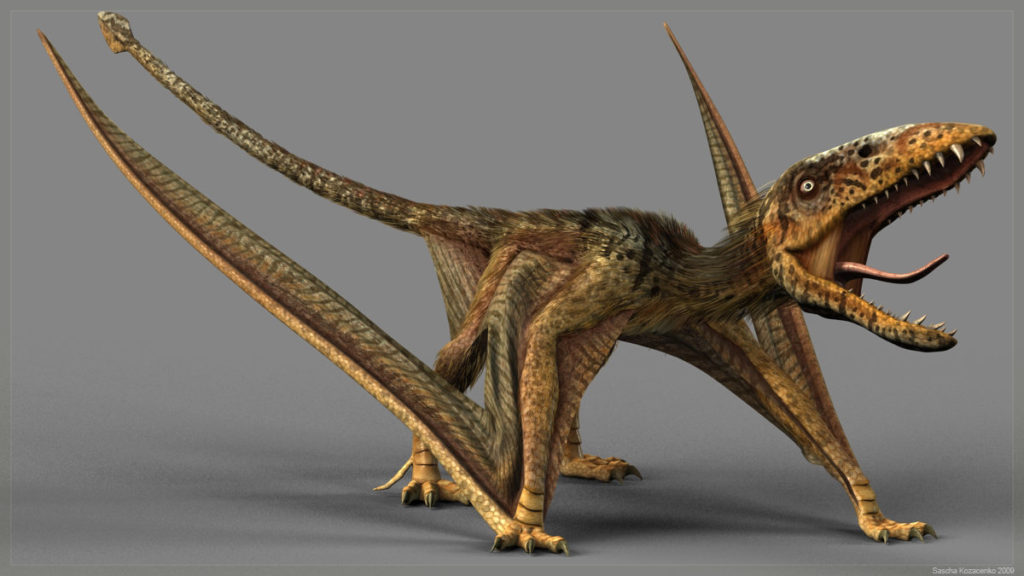
If you look closely at Dimorphodon pictures, then you might be quick to come to the conclusion that someone drew this animal wrong. After all, it does have that look like it was a model that somebody put together wrong – that somehow it large head was placed on its slender body by mistake. However, I assure you that is how this flying reptile actually looked.

Dimorphodon was approximately 2 feet long, weighed around 2 pounds and had a wingspan of about 4 feet. That made it about the size of a modern-day American Crow. However, it was probably a whole lot scarier than today’s crows because it did have that head that was filled with razor-sharp teeth. Teeth that could have been used to eat fish but may have also been used to eat insects as well. Paleontologists are quite sure at the moment.

One of the most interesting facts about Dimorphodon is that it had a long tail with a flap of skin at the end that was shaped like a diamond. Paleontologists believe that this was used to stabilize it during flight – much in the same way a tail is used to stabilize a kite. Which probably means that this pterosaur soared instead of actually flying, although it may have done a combination of both depending on the situation.


Dinosaurs – Scutosaurus

About Scutosaurus
Scutosaurus was an anapsid reptile which lived approximately 250 million years ago during the Late Permian Period. It was first discovered during the 1920s in Russia and was named by Vladimir Prokhorovich Amalitskii in 1922. Its name means “shield lizard” in Greek.

As you can probably tell from Scutosaurus pictures, this para-reptile was a massive creature. It was approximately 6 feet long – or about as long as a human male is long and weighed around 1,000 pounds – or a little more than what a horse weighs. It had thick bones and was also heavy muscled, which made it pretty strong. It was also covered in armor plates that would have given it some kind of defense against creatures which may have tried to have eaten it. Which it would’ve needed considering that it was probably pretty slow.

However, one of the most interesting facts about Scutosaurus isn’t its enormous size or its armor plating. No, what is interesting is that it probably wandered the flood plains of Eurasia like buffalo did on the plains of North America, hundreds of millions of years later. Paleontologists believe these huge herds of Scutosaurus would bellow to each other – much in the way cows do today. This has been substantiated by this creature’s huge cheeks which would have acted as bellows to allow them to communicate with each other.

Traveling in packs would have given this armored animal yet another form of defense. Herds provide animals a better chance of surviving a predator attack. Usually, when a predator attacks a herd it picks out the slowest or weakest of the herd. This allows the rest of the herd to escape. One of the predators which may have tried to attack Scutosaurus was Inostrancevia – a therapsid which had huge saber-tooth like teeth.

Scutosaurus lived on a diet of the dry vegetation which existed during this time and it had teeth that could get the job done. Its big, flat teeth could grind down plant matter so it could be further processed in its enormous gut. Most likely, this grazing anapsid reptile would have had to have eaten a whole lot of plants and grasses to maintain its enormous weight.

Pollution

when you get up in the morning the clean fresh air washes out your sleep. Where as in the night when you go out you just can’t breathe .it is all because of pollution. If I had to define pollution I would say

Pollution is something introduced into nature that is dirty unclean or has a harmful effect. Toxic waste dumped into water is an example of pollution. It refers to the chemical substances into the environment that is injurious for human, animals and plant life. The water, air noise and other forms of pollution is one terminology is known as the pollution of echo system.
There are many types of pollution, that are water , visual , thermal , plastic , noise , light and air
The measures of noise pollution are
Normal conversation level- 40 – 60 db
Health hazard- more than 80 db is safe
If someone just comes and shouts in your ears whaaaa you would become Heebie - jeebies Heebie-jeebies
These unusual words are used to express a feeling of fear and being uncomfortable
Few examples are
Heavy traffic – 90 db
Sound of aircraft engine – 100 – 200 db
Now imagine your house being just next to the airport, in midnight when the flight takes off how would it feel and so people don’t generally like to stay near airport.
The level of air quality is
Good 0 – 50 no risk
Moderate 51 -100 acceptable
Unhealthy for sensitive group 101 – 150 sensitive group experience health effects normal people don’t get affected
Unhealthy  151 – 200  everyone may experience health effect
Very unhealthy  201 – 300  health alert :  everyone may experience health effects
Hazardous 301 – 500 the entire population is effected
Impact- Over a million die prematurely every year due to air pollution , according to non profit health effects institute. Over a two million children – half of which in Delhi , have abnormalities in their lung functions , according to Delhi heart & lung institute , over the past decade air pollution has increased in India significantly. Asthma is the most common health problem faced by Indians and its accounts for more than half of health issues caused by air pollution
After , so much info about pollution . Let’s have some ways to prevent it

Conserve energy
Carpool , public transportation , bike or walk wherever possible
Keep car , boat and other engines properly tuned
Consider gas logs instead of wood
Reduce no. Of trips you take in your car
Conserve electricity